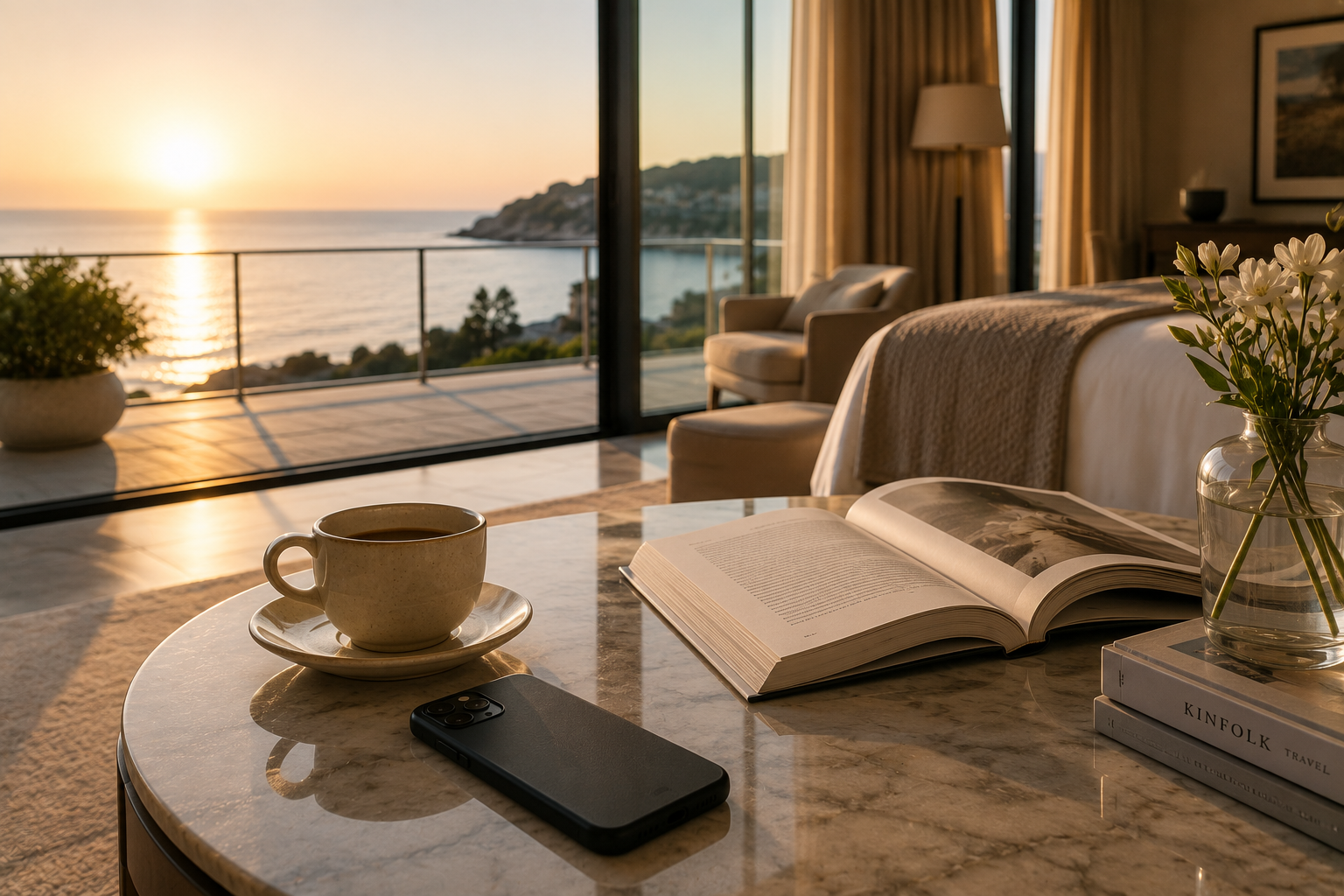




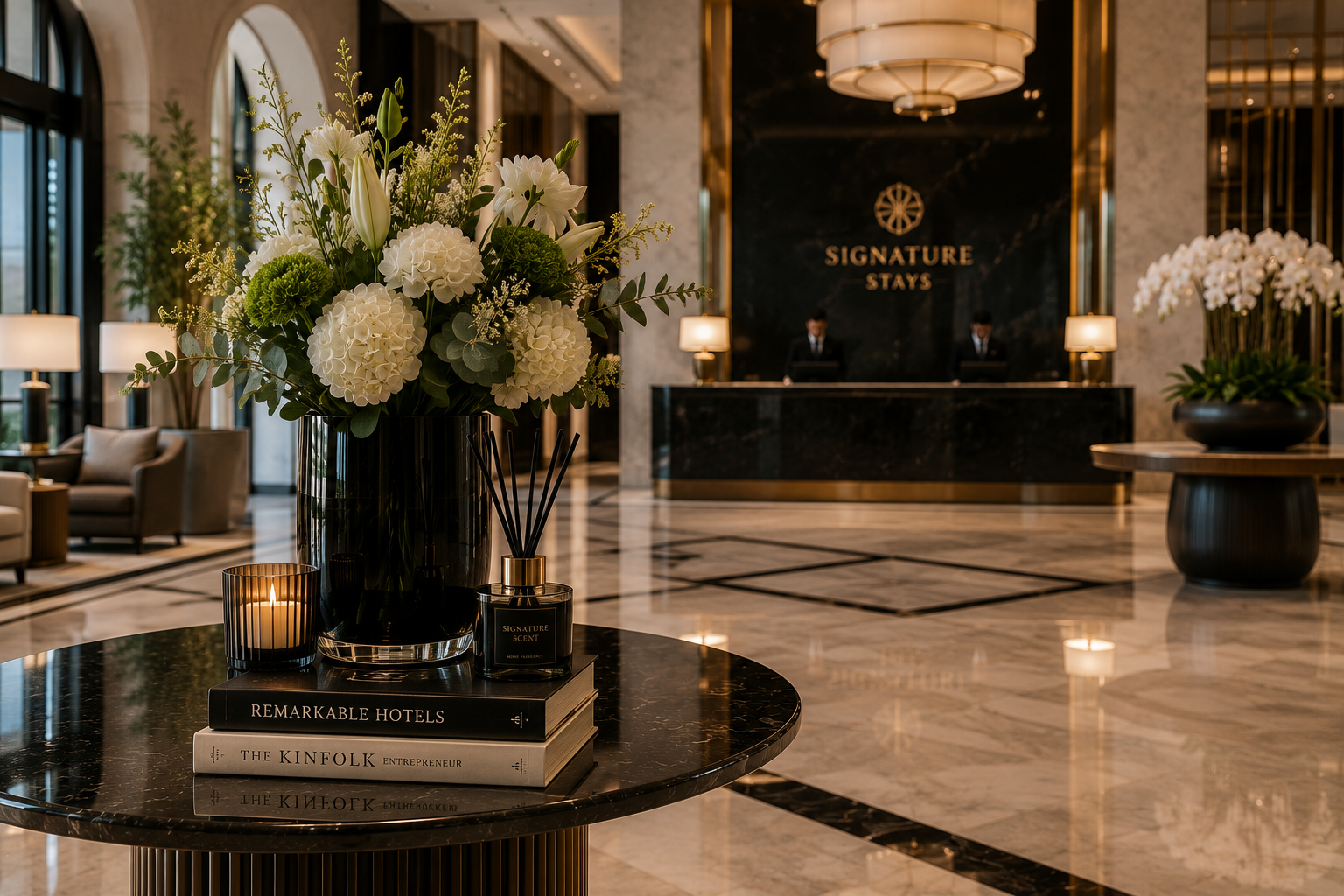
Walk into a luxury hotel for the first time, and you may remember its scent long after the details of the lobby begin to fade.
Perhaps it is black tea softened by bergamot, the warmth of cedar rising through polished wood, or a trace of fig that seems to follow you from the entrance to the lift. The fragrance is rarely strong enough to demand attention. It simply becomes part of the space, like lighting, texture or music.
That is the quiet power of home fragrance.
A room may be beautifully furnished, yet still feel unfinished. Scent gives an interior atmosphere. It can make an entrance feel welcoming, a bedroom more restful or a living room more intimate. Research has long shown that odours can act as unusually vivid emotional and autobiographical memory cues, helping explain why a familiar fragrance can return us instantly to a particular place or moment.
At SWORD Arabia, we believe the most memorable homes appeal to more than the eye. They create an experience—and fragrance is often the element that completes it.
Why Home Fragrance Matters
Interior design is usually discussed through objects: furniture, colour, art and architecture.
Fragrance is less visible, but no less influential.
A well-chosen scent establishes the emotional tone of a room before guests have consciously examined it. Fresh citrus may make a space feel brighter. Woods and amber can create warmth. Soft florals introduce delicacy, while aromatic green notes suggest calm and clarity.
This does not mean every room should smell strongly.
The most sophisticated approach is almost imperceptible. Fragrance should sit in the background, supporting the character of the interior rather than competing with it.
That philosophy mirrors the principles explored in Interior Design Trends That Last: restraint, quality and atmosphere tend to endure longer than anything designed merely to attract immediate attention.
Understanding Fragrance Families
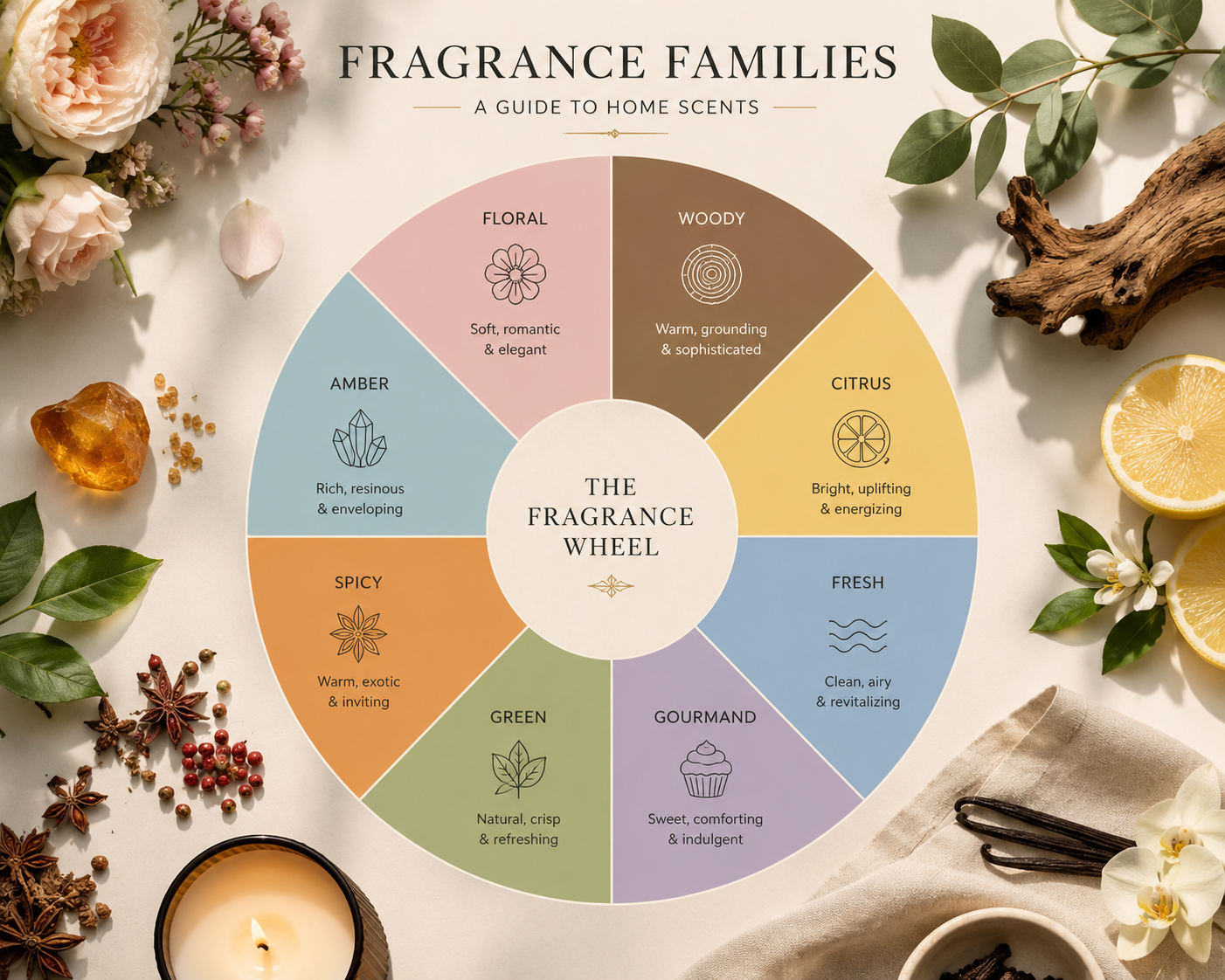
Before choosing a candle or diffuser, it helps to understand the broad fragrance families that shape how a space feels.
Floral scents range from airy rose and jasmine to richer tuberose. They suit rooms intended to feel elegant, romantic or softly welcoming.
Woody fragrances—cedar, sandalwood, vetiver and oud—bring depth and structure. They work particularly well in living rooms, libraries and formal spaces.
Citrus notes, including bergamot, lemon and mandarin, feel clean and energetic, making them ideal for kitchens, entryways and home offices.
Fresh fragrances often combine aquatic, mineral or airy notes. They create a sense of cleanliness without the sharpness of conventional air fresheners.
Amber scents feel warm, resinous and enveloping. Used sparingly, they add evening atmosphere to bedrooms and entertaining spaces.
Spicy fragrances, such as cardamom, clove and black pepper, create character and warmth, especially during cooler months.
Green scents evoke leaves, herbs, moss and gardens after rain. They suit modern interiors where nature and simplicity are central to the design.
Gourmand fragrances draw on edible notes such as vanilla, coffee or tonka bean. They can feel comforting, but require restraint to avoid becoming overly sweet.
Choosing the Right Fragrance for Every Room
A signature home scent does not require every room to smell identical.
It requires harmony.
Living Room
The living room is usually the social centre of the home, so its fragrance should feel welcoming rather than overly personal.
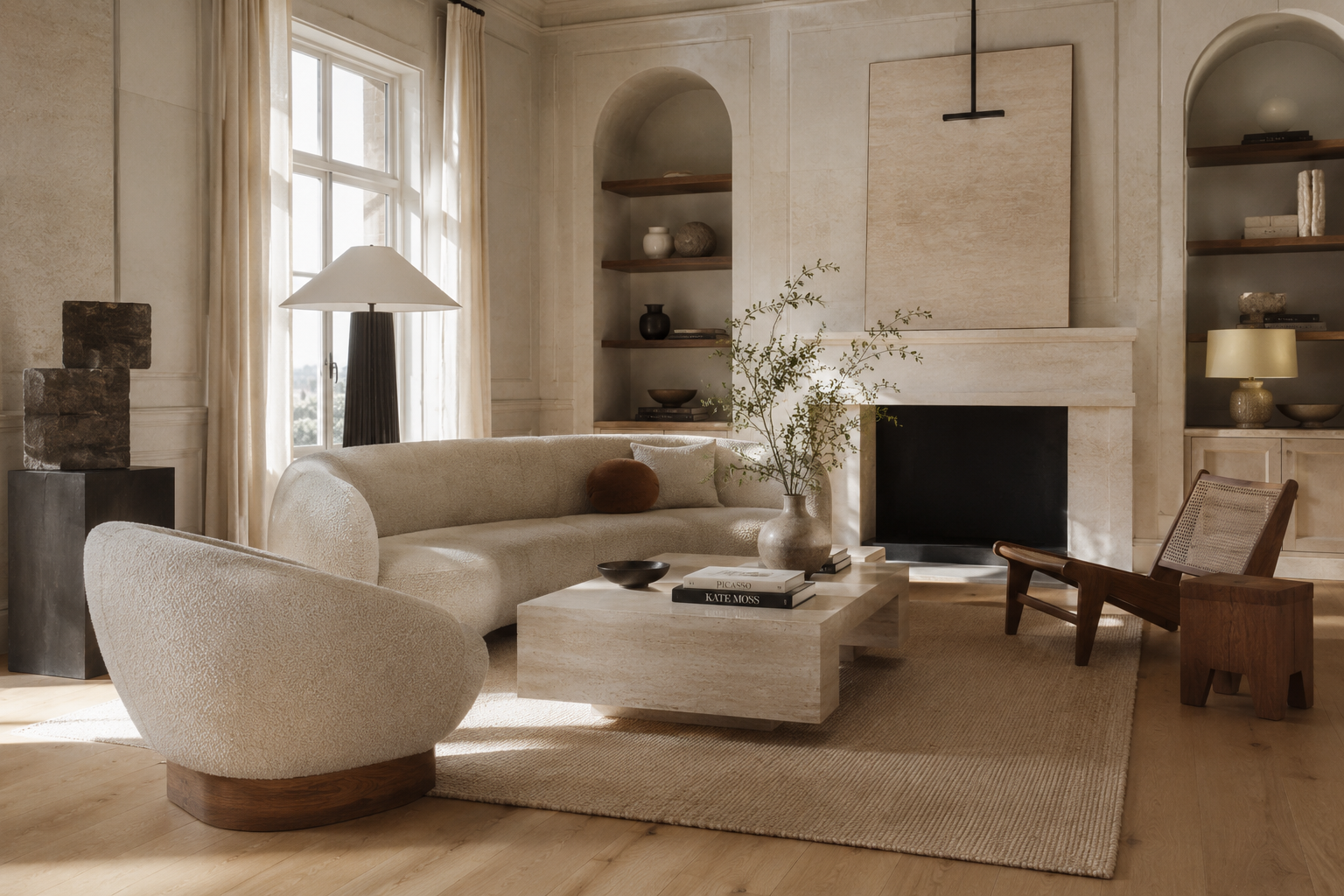
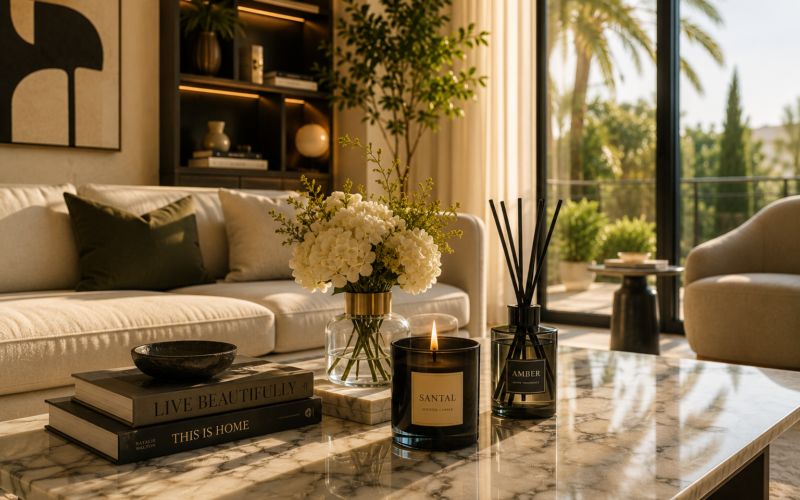
Woody, amber and gently spiced scents create warmth, while fig, tea and soft florals offer a lighter alternative. Imagine evening light across a linen sofa, a candle burning beside a stack of books and sandalwood settling quietly into the room. The scent is not the focal point.
It completes the atmosphere.
Bedroom
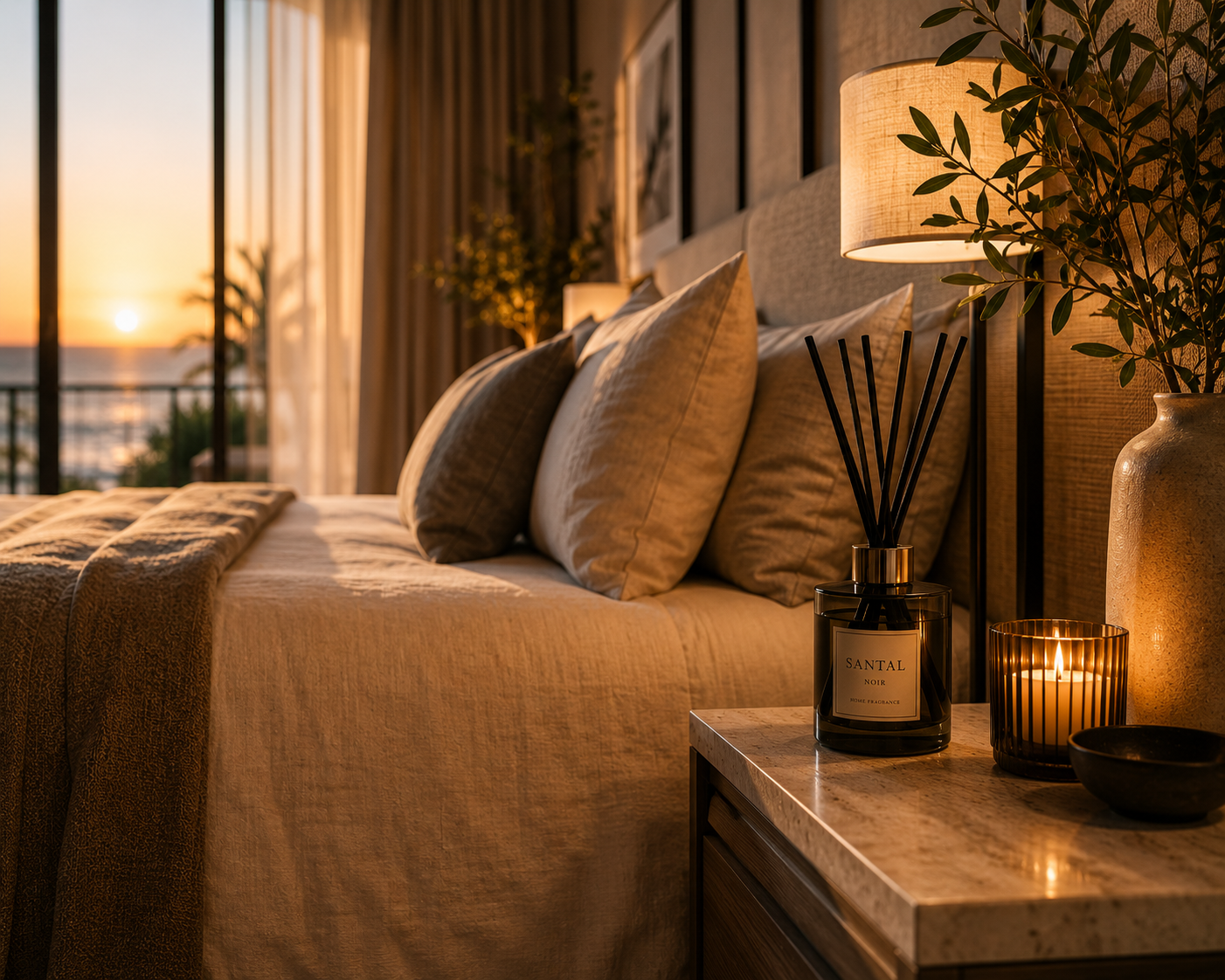
Bedrooms benefit from softer compositions associated with rest: lavender, iris, sandalwood, musk and powdery florals.
Avoid heavy projection near the bed. A small reed diffuser placed away from direct airflow or a candle extinguished before sleep can create a calmer experience without overwhelming the room.
Bathroom
Clean, aromatic scents work naturally in bathrooms.
Eucalyptus, neroli, mint, citrus and subtle marine accords reinforce freshness, particularly when paired with natural stone, warm towels and good ventilation.
Kitchen
The kitchen already carries its own aromas, so fragrance should clarify rather than compete.
Citrus, basil, rosemary and green herbal notes work well. Avoid rich florals or sweet gourmands while cooking, as they can clash with food.
Home Office
Fragrance can become a useful ritual for entering a focused state of mind.
Bergamot, rosemary, cedar and black tea feel alert yet composed. Keep the intensity low; concentration rarely benefits from a scent that dominates the desk.
Entryway
The entrance creates the first sensory impression of a home.
A diffuser with a distinctive but balanced fragrance—perhaps fig leaf, dry woods, citrus peel or incense—can introduce the character of the interior before a guest sees the next room.
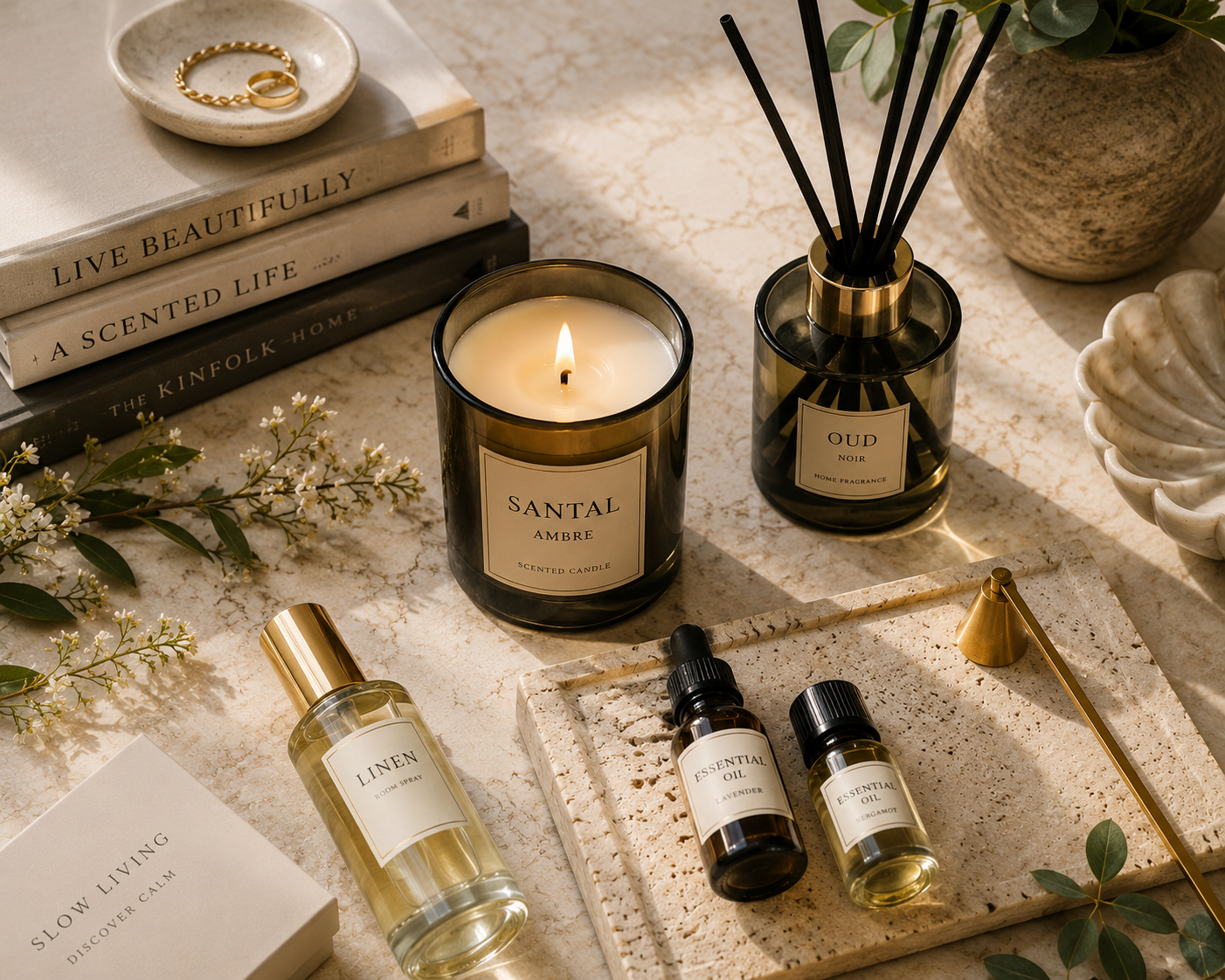
Candles, Reed Diffusers or Room Sprays?
Each format creates a different kind of experience.
Scented candles offer atmosphere as much as fragrance. The movement of flame and pool of melted wax make them ideal for evenings, dining rooms and living spaces. They require supervision and careful placement away from curtains, children and pets.
Reed diffusers provide continuous, low-maintenance fragrance. They are particularly effective in entryways, bathrooms and corridors where a candle would be impractical. Turn the reeds only when greater intensity is needed; doing so too often can make the scent overpowering and shorten the diffuser’s life.
Room sprays offer immediacy and control. They are useful before guests arrive or when refreshing a room quickly, but their effect is usually shorter-lived.
No single format is universally superior.
Candles create ritual.
Diffusers create consistency.
Sprays create a moment.
How Luxury Hotels Create Signature Scents
Luxury hotels understand that hospitality is remembered through emotion, not inventory.
A guest may forget the exact fabric of an armchair, but remember how calm the lobby felt at dusk. Fragrance becomes a sensory thread connecting the entrance, spa, corridors and guest rooms.
EDITION Hotels, for example, partnered with Le Labo to develop a signature black tea and bergamot scent designed to evoke comfort and a sense of the exotic. The Ritz-Carlton has likewise developed distinctive fragrance experiences with perfume houses, including a partnership with Diptyque centred on the fig and woody character of Philosykos.
The lesson for the home is not to imitate a hotel lobby.
It is to think with the same consistency.
Scent should reflect the architecture, climate and mood of the space. A beachfront home may suit mineral, citrus and sun-warmed wood notes. A darker, more formal interior may carry incense, leather or amber with greater ease.
Creating a Signature Home Fragrance
Begin with the feeling you want the home to hold.
Calm.
Warmth.
Freshness.
Intimacy.
Then choose one recurring note to connect the rooms. It might be bergamot, cedar, rose, fig or oud. That note does not need to appear in exactly the same formulation everywhere; it simply creates continuity.
Seasonality also matters. Citrus, herbs and green florals feel natural during hot summers, particularly across the GCC. Cooler months allow for richer woods, amber, spices and incense.
Houses such as Diptyque, Cire Trudon, Jo Malone London, Byredo and Loewe have helped turn home fragrance into an extension of interior style, but a signature scent is not defined by its label.
It is defined by how naturally it belongs to the home.
Common Home Fragrance Mistakes
The most common mistake is using too much.
When several candles, diffusers and sprays compete at once, the result becomes confusing rather than luxurious. Let one fragrance lead in each area and allow air to move between rooms.
Scale matters too. A strong diffuser may feel elegant in a large entrance hall but oppressive in a small powder room.
Ventilation should never be ignored. The International Fragrance Association advises using home-fragrance products as directed and recommends proper ventilation; its standards also provide a recognised framework for the safe use of fragrance ingredients.
Finally, fragrance should never be used to conceal poor air quality. A clean, ventilated room is always the foundation. Scent is the finishing layer.
Frequently Asked Questions
Which type of home fragrance lasts the longest?
Reed diffusers generally provide the most continuous fragrance, often lasting several weeks or months depending on their size, formulation, room temperature and how frequently the reeds are turned.
Are candles or diffusers better?
Candles are better for atmosphere and occasional use, while diffusers provide consistent fragrance without a flame. Many homes benefit from both, used in different rooms or at different times.
Can every room have a different scent?
Yes, but the fragrances should share a common mood or note. Completely unrelated scents can make the home feel fragmented, while subtle variation creates interest without sacrificing continuity.
Which scents work best in hot climates?
Citrus, green, herbal, mineral and light woody compositions usually feel more comfortable in heat. Heavy amber or gourmand scents can still work, but are best used sparingly or reserved for evening.
Can home fragrance influence mood?
Scent can influence emotional experience and trigger autobiographical memories, although responses remain highly personal and shaped by individual associations.
The Final Word
The best home fragrance is not the one guests notice first.
It is the one they remember later.
A trace of cedar in the living room. Bergamot near the entrance. Linen, iris or lavender settling softly into the bedroom at night.
Used thoughtfully, fragrance becomes part of the architecture of daily life, unseen, but deeply felt.
At SWORD Arabia, we believe true luxury often lives in these quieter details. Not in how strongly a home announces itself, but in how completely it creates a sense of belonging.
A signature scent does exactly that.
It turns a beautiful interior into a place that feels unmistakably its own.