





There is a particular kind of silence that has become increasingly rare.
It isn’t found in remote mountains or on private islands. It doesn’t require switching off every device or disappearing for a weekend.
It exists in the few moments when your attention belongs entirely to you.
Imagine a quiet hotel suite overlooking the sea. Morning light filters through the curtains as breakfast arrives. Coffee is still warm. The view is uninterrupted.
Before taking the first sip, the phone lights up.
Three emails.
Eight notifications.
A calendar reminder.
A breaking news alert.
An AI-generated summary.
A quick glance at social media.
Within seconds, the morning has changed. The room is still peaceful, yet your mind is somewhere else entirely.
This is the defining paradox of modern life. Technology has never made us more connected, more informed or more productive, yet many people feel increasingly distracted, mentally exhausted and unable to fully enjoy the moments that matter.
At SWORD Arabia, we believe the answer is not abandoning technology. Smartphones, artificial intelligence and digital platforms have transformed how we work, travel, learn and communicate. The real challenge is learning to use them intentionally rather than allowing them to dictate our attention.
A digital detox is not about rejecting modern life. It is about creating healthier digital habits, reducing unnecessary screen time and building a relationship with technology that supports your wellbeing instead of constantly competing for your focus.
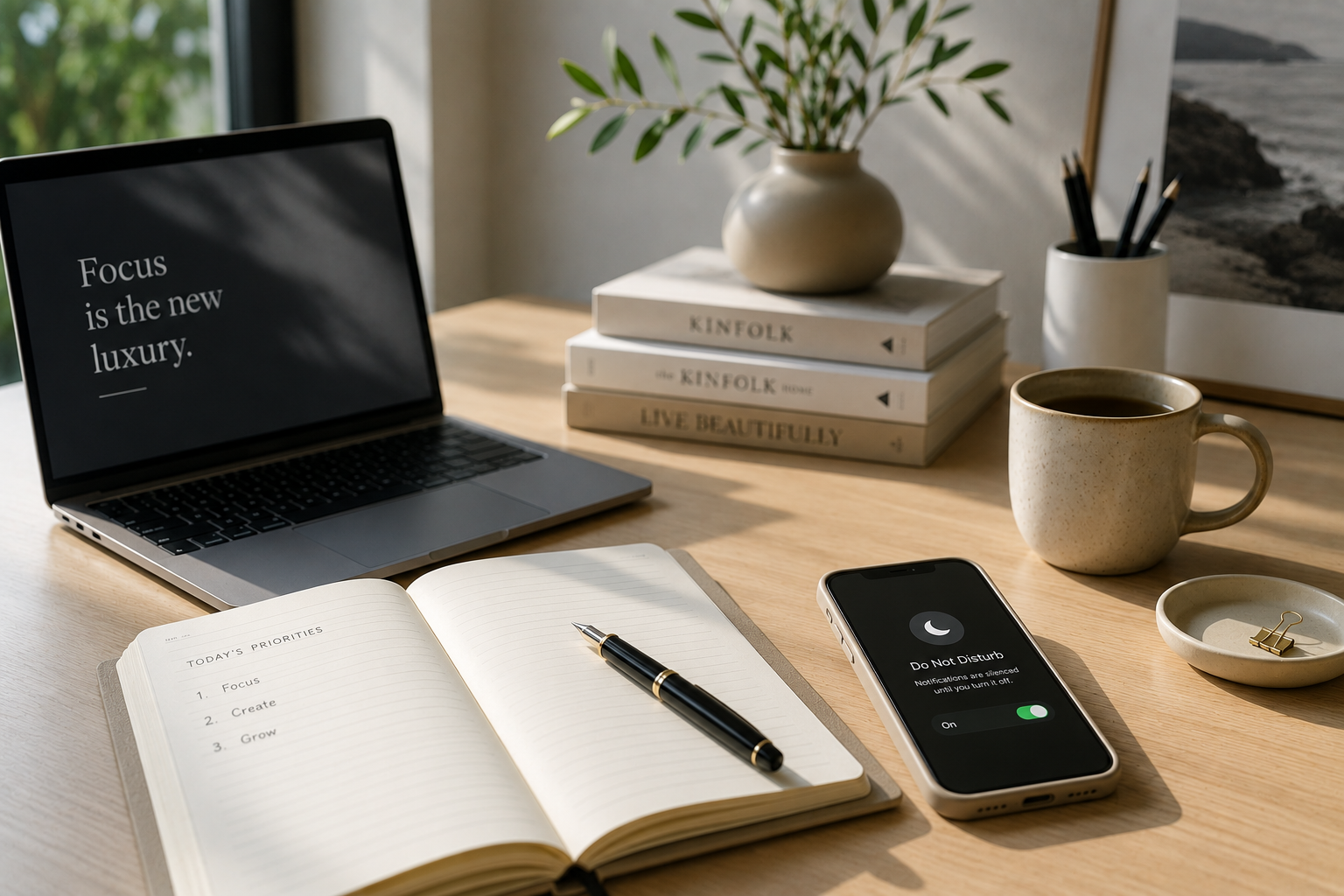
What Is a Digital Detox?
A digital detox is the intentional practice of reducing time spent on digital devices, particularly smartphones, social media platforms, emails and other always-on technologies, to improve mental wellbeing, focus and overall quality of life.
Contrary to popular belief, a digital detox does not require disappearing into the wilderness or deleting every social media account overnight.
For most people, a healthier approach is far more realistic.
It means creating boundaries around technology so that devices remain useful tools rather than constant interruptions.
This philosophy is becoming increasingly important as work, entertainment and communication continue to merge onto the same screen. The average professional now moves between emails, messaging apps, virtual meetings, AI assistants and social media dozens of times throughout the day, often without realising how frequently attention shifts from one task to another.
Rather than asking how to eliminate technology, today’s more relevant question is:
How can we use technology without allowing it to consume our attention?
Why Our Brains Never Truly Switch Off
Modern technology is designed to capture attention.
Every notification, vibration and badge icon competes for a few seconds of our focus. Individually, these interruptions may seem insignificant. Collectively, they create a constant cycle of mental switching that makes sustained concentration increasingly difficult.
The rise of the attention economy has fundamentally changed how digital products are designed. Many platforms compete not simply for users, but for the amount of time users spend engaging with their content.
Emails arrive around the clock.
Social media feeds never end.
News updates refresh continuously.
AI tools generate new ideas instantly.
Streaming platforms recommend another episode before the previous one has finished.
Our brains rarely receive a signal that says, “You’ve reached the end.”
According to the American Psychological Association, frequent interruptions and information overload can increase stress while reducing the ability to focus on complex tasks. Rather than processing information deeply, we often skim, scroll and switch between activities, leaving the brain in a constant state of partial attention.
This continuous stimulation also affects how we experience leisure.
Watching a film while checking messages.
Reading an article while replying to emails.
Sharing a holiday before fully experiencing it.
Being physically present no longer guarantees mental presence.
As explored in The Return of Slow Living, intentionally slowing the pace of daily life isn’t about doing less—it’s about experiencing more of what truly matters.
The Hidden Cost of Constant Connectivity
Technology has delivered extraordinary convenience, but every convenience carries a trade-off.
The challenge isn’t simply the amount of screen time we accumulate. It’s the way constant connectivity quietly reshapes our ability to think, rest and relate to the world around us.
Attention
Attention has become one of the world’s most valuable resources.
Every notification, advertisement and recommendation competes for it.
Research has shown that even brief interruptions can significantly disrupt concentration, making it harder to return to deep, meaningful work.
Author Cal Newport explores this concept extensively in Deep Work, arguing that uninterrupted focus is becoming increasingly rare—and increasingly valuable—in today’s knowledge economy.
For professionals, entrepreneurs and creatives alike, protecting attention may now be one of the most important productivity habits.
Sleep
One of the clearest effects of excessive screen time appears at night.
Many people end their day scrolling through news, replying to messages or watching videos moments before falling asleep.
The blue light emitted by digital screens can suppress melatonin, the hormone that helps regulate the body’s natural sleep cycle. According to Harvard Medical School, reducing screen exposure before bedtime can support healthier sleep patterns and improve overall sleep quality.
Creating a screen-free bedroom is often one of the simplest—and most effective—digital wellness habits.
Stress
Being constantly reachable can create the feeling that work never truly ends.
Unread emails, group chats and endless notifications keep many people mentally connected to work long after leaving the office.
Over time, this continuous state of availability may contribute to stress, decision fatigue and symptoms associated with burnout.
A digital detox doesn’t eliminate responsibilities, it simply creates intentional moments where recovery becomes possible.
Creativity
Some of our best ideas arrive during moments of quiet.
Walking without headphones.
Waiting in line.
Looking out of a window.
These small pauses once allowed the mind to wander freely.
Today, they are often replaced by another glance at a screen.
Without moments of uninterrupted reflection, creativity has fewer opportunities to emerge.
Relationships
Perhaps the greatest cost of constant connectivity is presence.
Sharing a meal while checking notifications.
Answering emails during family conversations.
Reaching for a phone during moments of silence.
Technology has made communication effortless, yet meaningful connection still depends on giving people something increasingly rare:
Your complete attention.
Signs You May Need a Digital Detox
Technology has become so deeply woven into daily life that unhealthy habits often develop gradually rather than all at once.
Most people don’t suddenly become overwhelmed by their devices. Instead, they adapt to a constant stream of notifications, messages and information until distraction begins to feel normal.
If any of the following habits sound familiar, it may be time to rethink your relationship with technology, not by disconnecting completely, but by creating healthier digital boundaries.
You Check Your Phone Without Thinking
Have you ever unlocked your phone without knowing exactly why?
Perhaps you intended to check the weather but found yourself scrolling through social media ten minutes later.
These automatic behaviours are a hallmark of habitual smartphone use. Over time, they train the brain to seek constant stimulation, making it harder to stay focused on a single task.
You Struggle to Concentrate
Reading a book.
Writing an important email.
Finishing a presentation.
Even watching a film without checking your phone.
If these activities feel increasingly difficult, constant digital interruptions may be reducing your ability to sustain attention.
Many professionals confuse busyness with productivity. In reality, switching repeatedly between tasks often creates the illusion of efficiency while making meaningful work more difficult.
You Scroll Even When You Don’t Enjoy It
One of the clearest signs of digital overload is doomscrolling—continuing to consume endless content even after it stops feeling useful or enjoyable.
Rather than leaving you informed, excessive scrolling often leaves you mentally fatigued.
Your Sleep Has Changed
If your phone is the last thing you see before sleeping and the first thing you reach for in the morning, your evening routine may be working against your sleep quality.
The Mayo Clinic recommends limiting screen exposure before bedtime as part of healthy sleep hygiene, particularly for people struggling with poor sleep or difficulty falling asleep.
You Feel Anxious Without Your Phone
Leaving home without a phone can feel surprisingly uncomfortable.
While smartphones are essential tools for modern life, feeling genuinely anxious when separated from them may indicate that technology has shifted from being useful to becoming psychologically dominant.
A digital detox is not about removing this dependence overnight—it is about gradually rebuilding confidence that every spare moment does not need to be filled by a screen.
How to Start a Digital Detox
One of the biggest misconceptions about digital detoxes is that they require dramatic lifestyle changes.
They don’t.
The most sustainable habits are usually the smallest ones.
Reduce Notifications
Every notification asks your brain the same question:
“Would you like to stop what you’re doing?”
The fewer unnecessary notifications you receive, the fewer decisions your brain needs to make throughout the day.
Keep alerts for essential communication.
Turn off everything else.
Create Phone-Free Mornings
The first moments after waking often shape the rest of the day.
Instead of beginning with emails or social media, consider delaying your first screen interaction by 20–30 minutes.
Use that time for breakfast, reading, stretching or simply enjoying a quiet start to the morning.
This small habit creates a noticeable sense of control before the day’s demands begin.
Make Meals Screen-Free
Sharing a meal without phones may seem simple, yet it remains one of the easiest ways to become more present.
Whether dining alone or with others, uninterrupted meals encourage slower eating, better conversation and a genuine mental break from constant digital stimulation.
Keep Technology Out of the Bedroom
Bedrooms should support recovery, not productivity.
Charging your phone outside the bedroom—or even across the room—reduces the temptation to scroll before sleeping or immediately after waking.
Combined with consistent sleep routines, this habit can significantly improve digital wellness.
Schedule Deep Work
Rather than checking messages continuously, dedicate specific periods of the day to uninterrupted work.
This approach, often called time-blocking, allows your brain to remain focused on one task before returning to communication later.
Professionals who protect blocks of uninterrupted concentration frequently produce higher-quality work while feeling less mentally exhausted.
Use Social Media Intentionally
Social media is not inherently harmful.
The problem begins when consumption becomes automatic rather than intentional.
Instead of opening apps whenever boredom appears, decide in advance:
- Why am I opening this app?
- What do I want to do?
- How long will I stay?
A few moments of intention often prevent many minutes of unconscious scrolling.
How Long Should a Digital Detox Last?
Many people imagine a digital detox as a weekend without Wi-Fi or a week spent completely offline.
While these experiences can be refreshing, they are rarely sustainable for professionals whose work depends on technology.
A more practical approach focuses on habits rather than temporary escapes.
Instead of asking:
“How many days should I disconnect?”
Ask:
“What digital habits can I improve every day?”
For many people, meaningful change begins with:
- One phone-free hour each evening.
- A screen-free bedroom.
- Phone-free meals.
- Notification-free work sessions.
- One afternoon each week spent largely offline.
These small changes often produce more lasting results than an extreme detox followed by old habits.
Common Digital Detox Mistakes
Not every attempt at reducing screen time leads to healthier technology use.
Some of the most common mistakes include:
Trying to Quit Everything at Once
Deleting every app overnight often creates frustration rather than lasting behavioural change.
Sustainable habits are usually built gradually.
Replacing One Screen With Another
Putting away your phone only to spend hours watching television rarely reduces overall digital stimulation.
The goal is mindful technology use, not simply changing devices.
Expecting Instant Results
Improving focus and reducing digital distractions takes time.
Just as physical fitness develops through consistent training, healthier digital habits develop through repetition rather than perfection.
Digital Detox Doesn’t Mean Digital Isolation
Technology remains one of the most powerful tools ever created.
It allows businesses to grow across continents.
Families to stay connected.
Ideas to spread instantly.
Knowledge to become accessible to millions.
Artificial intelligence is transforming how professionals research, write, analyse and solve problems. Video calls have redefined global collaboration. Smartphones place navigation, banking and communication in a single device.
The goal of a digital detox is not to reject these innovations.
It is to ensure they remain tools rather than constant sources of interruption.
Healthy digital wellbeing is measured not by how little technology you use, but by how intentionally you use it.
Luxury Is Owning Your Attention
Luxury has traditionally been associated with beautiful homes, exceptional craftsmanship and rare experiences.
Today, another form of luxury is becoming increasingly valuable.
Undivided attention.
The ability to enjoy dinner without checking a notification.
To read a chapter without interruption.
To complete meaningful work without switching between five different apps.
To watch a sunset without feeling the urge to photograph it first.
In an economy designed to compete for every spare moment, protecting your attention may be one of the most valuable investments you can make.
As explored in The Return of Slow Living, modern luxury is no longer defined only by what we own—it is increasingly defined by the quality of our time, our presence and our ability to experience life without constant distraction.
Frequently Asked Questions
What is a digital detox?
A digital detox is the intentional practice of reducing unnecessary screen time and creating healthier boundaries around technology to improve focus, sleep and overall wellbeing.
Does a digital detox really work?
Research suggests that reducing unnecessary digital distractions can support improved attention, healthier sleep habits and lower perceived stress, particularly when combined with consistent daily routines.
How much screen time is too much?
There is no universal limit. Instead of focusing only on hours, consider how screen use affects your sleep, productivity, relationships and mental wellbeing.
Do I need to delete social media?
No. A successful digital detox is about using social media intentionally rather than automatically.
Can professionals do a digital detox?
Absolutely. In fact, professionals often benefit the most by reducing distractions, protecting periods of deep work and establishing clearer boundaries between work and personal life.

The Quiet Luxury of Being Present
Technology is one of the defining achievements of our time. It has changed how we build businesses, maintain relationships and experience the world, often in remarkable ways.
The question has never been whether technology belongs in our lives.
It is whether we still decide how it fits into them.
A digital detox is rarely about switching everything off. More often, it is about recognising that constant connection isn’t the same as meaningful engagement. The moments that stay with us, a conversation over dinner, a slow morning, an uninterrupted train of thought, are rarely accompanied by a notification.
Perhaps the future of digital wellbeing isn’t measured by fewer devices or less innovation, but by something far more personal: knowing when to look up, when to disconnect, and when a moment deserves your full attention.
Because in a world where almost everything competes for it, attention has become one of the rarest forms of luxury.