

There are fashion houses that define an era.
Then there are those that redefine fashion itself.
For nearly eight decades, Dior has done precisely that. More than a celebrated Parisian maison, the House of Dior has become a symbol of elegance, craftsmanship and cultural influence, shaping everything from haute couture and fragrance to beauty, jewellery and modern luxury.
Yet Dior’s story is not simply one of remarkable garments or iconic handbags.
It is the story of a house that has repeatedly reinvented itself without abandoning the vision of the man who founded it.
Few luxury brands have navigated changing generations with such confidence. Every creative director has left a distinctive signature, yet every collection still carries traces of Christian Dior’s original philosophy: that fashion should celebrate beauty, optimism and exceptional craftsmanship.
Today, Dior remains one of the world’s most influential luxury fashion houses, continuing to shape conversations on creativity, femininity and innovation while preserving a heritage that began on a quiet avenue in Paris.
At SWORD Arabia, we believe the history of Dior is not merely the history of a fashion brand. It is the story of how elegance continually evolves without losing its identity.
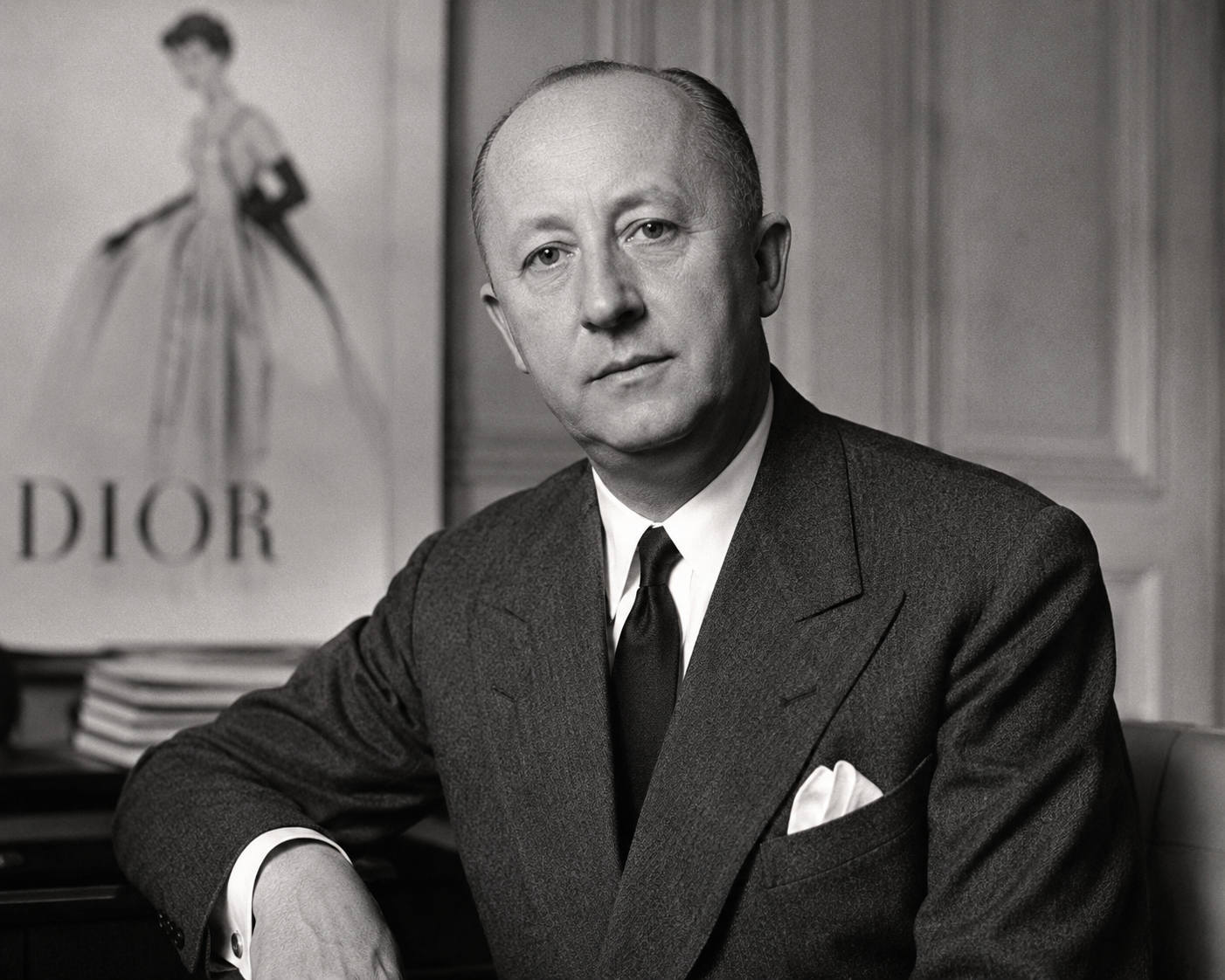
The Man Behind the Maison: Christian Dior
Long before the world knew the name Christian Dior, he imagined a very different future.
Born in Granville, Normandy, in 1905, Dior grew up surrounded by gardens, art and architecture rather than fashion. His family hoped he would pursue diplomacy, yet his greatest fascination lay elsewhere.
Paris in the 1920s was alive with artists, writers and designers redefining modern culture. Dior immersed himself in this creative world, opening an art gallery that exhibited works by artists including Pablo Picasso, Georges Braque and Salvador Dalí.
Although financial hardship eventually forced the gallery to close, those years profoundly shaped his understanding of proportion, colour and artistic composition, qualities that would later define every Dior collection.
Fashion entered his life almost unexpectedly.
After selling fashion sketches to couture houses, Dior joined designer Robert Piguet before later working alongside Lucien Lelong during the Second World War, where fellow designers such as Pierre Cardin were also beginning their careers.
These early experiences introduced him to the extraordinary craftsmanship of Parisian ateliers and the discipline required to create haute couture at the highest level.
They also convinced him that fashion could be something greater than clothing.
It could change how people felt.
It could restore confidence.
It could become art in motion.
That philosophy still defines the House today and continues to inspire discussions about craftsmanship in Haute Couture Explained: What Makes Fashion Truly Couture?
1947: The Collection That Changed Fashion Forever
Few moments have altered the course of fashion as dramatically as February 12, 1947.
Europe was emerging from the devastation of the Second World War.
Fabric had been rationed for years.
Women’s clothing reflected practicality rather than imagination.
Fashion had become restrained because life itself demanded restraint.
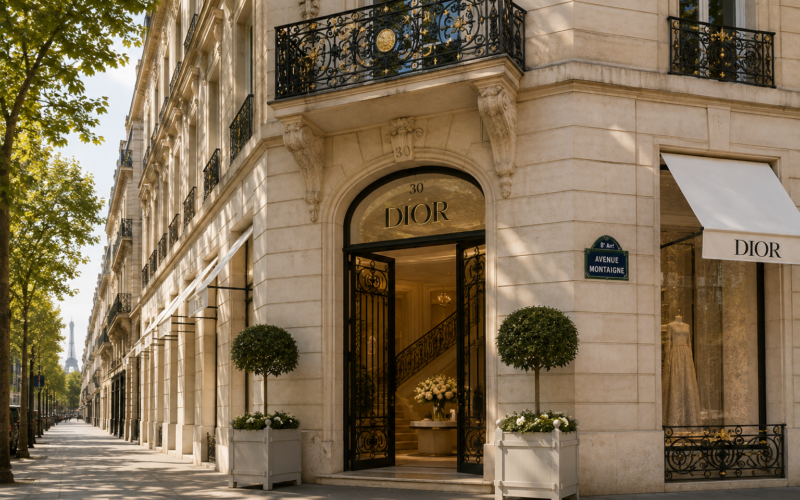
Then Christian Dior presented his first collection at 30 Avenue Montaigne in Paris.
Everything changed.
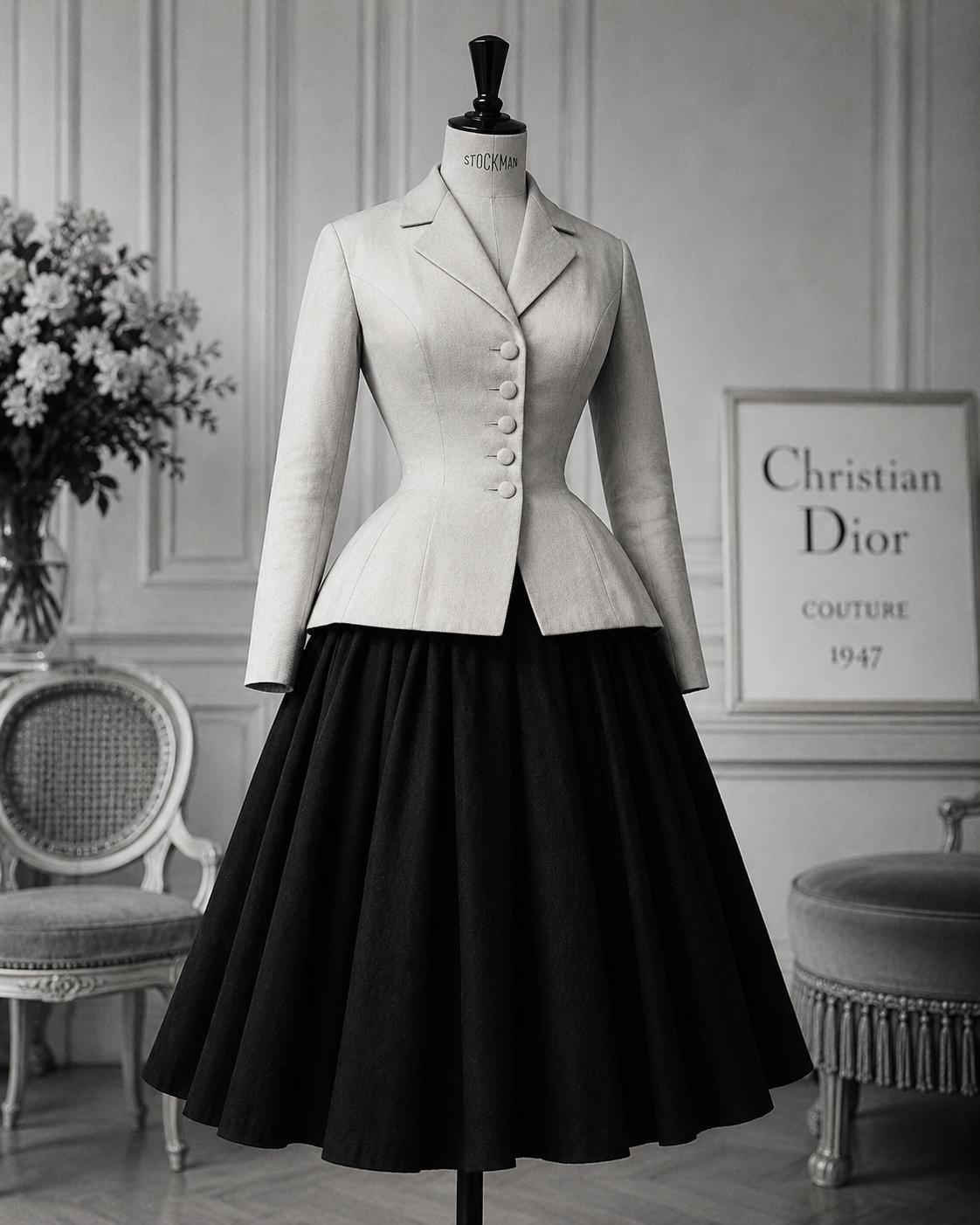
The collection introduced rounded shoulders, dramatically full skirts, softly structured hips and an unmistakably defined waist.
It celebrated femininity with a confidence the world had not seen for years.
American editor Carmel Snow famously described the collection with two words that would enter fashion history forever:
“It’s such a new look.”
The phrase became synonymous with Dior.
The New Look was not simply a silhouette.
It represented optimism after years of uncertainty.
Critics debated whether the generous use of fabric was extravagant so soon after wartime rationing, yet audiences embraced Dior’s vision with remarkable enthusiasm.
Women once again desired elegance rather than necessity.
Luxury no longer represented excess alone.
It represented hope.
This defining moment transformed Christian Dior into an international name almost overnight and established Paris once again as the undisputed capital of haute couture.
The influence of that collection can still be seen in modern runway presentations, including recent Paris collections such as Dior Couture Blooms Into a Dream Garden in Paris.
Building the House of Dior
Christian Dior understood something many designers of his generation did not.
A fashion house could become much more than clothing.
Almost immediately after the success of the New Look, Dior expanded into accessories, gloves, hats, shoes and licensing partnerships that helped introduce the brand to international audiences.
Fragrance followed naturally.
In 1947, the maison introduced Miss Dior, named in honour of Christian Dior’s beloved sister Catherine.
The perfume quickly became one of the defining fragrances of modern luxury, demonstrating that the emotional identity of a fashion house could extend beyond garments.
This philosophy would later shape the luxury industry itself.
Today, nearly every major fashion house operates across fashion, fragrance, beauty, jewellery and lifestyle.
Dior helped establish that model decades earlier.
The maison also continued expanding its haute couture ateliers, where hundreds of artisans worked quietly behind the scenes.
Each embroidered flower, each hand-finished seam and each fitting reflected Dior’s belief that true luxury could never be separated from craftsmanship.
This commitment to exceptional savoir-faire continues to distinguish the House today and places Dior alongside the world’s great luxury institutions.
Its evolution closely parallels the journey explored in The History of Chanel: From Paris Atelier to Global Luxury Icon, where another legendary French maison transformed heritage into enduring global influence.
Meanwhile, institutions such as La Galerie Dior preserve the maison’s archives, offering visitors an immersive look at Dior’s history, iconic creations and creative evolution.
Likewise, the House of Dior’s official website documents the brand’s heritage while showcasing its contemporary collections across couture, ready-to-wear, beauty, jewellery and fragrance.
The Creative Directors Who Shaped Dior
When Christian Dior passed away unexpectedly in 1957, the fashion world questioned whether the House could survive without the man whose vision had transformed post-war elegance.
Few could have predicted that Dior’s greatest strength would become its remarkable ability to evolve.
Across the decades, each creative director has interpreted Dior differently. Some preserved the founder’s codes with quiet restraint, while others challenged convention through theatrical imagination or modern minimalism.
Yet despite their contrasting aesthetics, they all returned to the same question:
How do you honour Christian Dior without simply repeating him?
That question continues to define the history of Dior today.
Yves Saint Laurent: A Remarkable Beginning
When Christian Dior died, his successor was only twenty-one years old.
Yves Saint Laurent, who had joined the House as Dior’s assistant, suddenly found himself responsible for one of the world’s most prestigious couture maisons.
It was an extraordinary responsibility for such a young designer.
Rather than attempting to imitate Dior, Saint Laurent introduced a softer, lighter interpretation of femininity.
His 1958 Trapeze Line replaced the tightly defined waist of the New Look with flowing silhouettes that reflected changing attitudes among younger women.
Fashion was beginning to move away from post-war formality.
Saint Laurent understood that elegance could evolve without abandoning refinement.
Although his tenure at Dior lasted only a short time before military service led to his departure, it proved that the House could survive beyond its founder.
More importantly, it established an idea that continues to define Dior today:
Every generation deserves its own interpretation of elegance.
Marc Bohan: Three Decades of Quiet Sophistication
If Saint Laurent represented youthful change, Marc Bohan embodied stability.
Appointed Artistic Director in 1961, Bohan guided Dior for nearly three decades, making him one of the longest-serving creative leaders in the maison’s history.
His vision was intentionally understated.
Rather than dramatic reinvention, Bohan focused on timeless sophistication, impeccable tailoring and effortless femininity.
These were the years when Dior strengthened its international reputation, expanded its ready-to-wear collections and became increasingly influential beyond haute couture.
His work appealed to royalty, Hollywood stars and elegant women who valued discretion over spectacle.
Although his collections rarely generated the controversy of later decades, they quietly reinforced Dior’s identity as one of France’s defining luxury houses.
Gianfranco Ferré: Architectural Elegance
In 1989, Italian designer Gianfranco Ferré became the first non-French creative director of Dior.
An architect by training, Ferré approached fashion through structure, proportion and precision.
His collections celebrated dramatic silhouettes, luxurious fabrics and sculptural tailoring while remaining deeply respectful of Christian Dior’s original fascination with architecture and gardens.
Ferré demonstrated that Dior’s heritage belonged not only to France but to the broader world of luxury craftsmanship.
His work balanced grandeur with discipline, reaffirming the House’s position at the pinnacle of haute couture.
John Galliano: The Era of Spectacle
Few creative directors transformed Dior as dramatically as John Galliano.
Appointed in 1996, Galliano brought theatrical storytelling to the House unlike anything seen before.
His haute couture collections became elaborate performances inspired by history, travel, literature and fantasy.
Runways turned into cinematic experiences.
Garments resembled wearable works of art.
Each collection blurred the boundaries between fashion, costume and performance.
Galliano never abandoned Christian Dior’s emphasis on craftsmanship.
Instead, he amplified it.
Behind every extravagant silhouette remained thousands of hours of embroidery, tailoring and handwork produced inside Dior’s Paris ateliers.
His era also coincided with a growing fascination for couture among collectors and museums, reinforcing the cultural value of fashion itself.
That same celebration of craftsmanship continues across contemporary couture, from Elie Saab Turns Couture Into Evening Drama in Paris to Iris van Herpen Turns Couture Into Living Architecture, where artistry remains the defining characteristic of haute couture.
Galliano’s tenure ended in 2011 following public controversy, bringing one of Dior’s most influential chapters to a close.
Raf Simons: Modern Minimalism
Following Galliano’s dramatic years, Raf Simons introduced an entirely different perspective.
Where Galliano embraced theatrical excess, Simons explored purity.
His collections focused on architectural tailoring, clean lines and contemporary femininity while carefully referencing Christian Dior’s most recognisable silhouettes.
The documentary Dior and I offered an unprecedented look inside Dior’s haute couture ateliers during Simons’ first collection, revealing the extraordinary collaboration between designers and artisans that continues to define the House.
His work reminded audiences that innovation does not always require spectacle.
Sometimes restraint can be equally revolutionary.
Maria Grazia Chiuri: Fashion as Conversation
When Maria Grazia Chiuri became Dior’s first female Creative Director in 2016, the appointment carried enormous symbolic significance.
Nearly seventy years after Christian Dior introduced the New Look, a woman would now reinterpret his vision.
Chiuri approached Dior through culture as much as fashion.
Her collections explored craftsmanship alongside literature, contemporary art and feminist thought, often collaborating with female artists from around the world.
She also strengthened Dior’s dialogue with younger generations while expanding the House’s presence across ready-to-wear, accessories and global cultural events.
Her work demonstrated that heritage should never become static.
Instead, it should continue asking new questions.
Jonathan Anderson: A New Chapter
The appointment of Jonathan Anderson marks another significant moment in Dior’s history.
Known for combining conceptual creativity with exceptional craftsmanship, Anderson has earned international recognition for challenging traditional ideas of luxury while maintaining deep respect for artisanal techniques.
His arrival signals another evolution rather than a departure.
Like every creative director before him, Anderson inherits Christian Dior’s extraordinary legacy while facing the same enduring challenge:
How do you create something unmistakably new inside one of fashion’s most historic houses?
The answer will shape the next chapter of Dior’s story, just as every generation has reshaped it before.
Throughout these decades of transformation, Dior has demonstrated a rare ability to evolve without losing sight of its identity, a balance that remains one of the defining characteristics of modern luxury. It is also one of the reasons the House continues to dominate conversations during Paris Fashion Week, where each new collection is measured not only against contemporary fashion but against Dior’s own remarkable history.
Dior’s Most Iconic Creations
The true measure of a luxury fashion house is not simply the number of collections it presents, but the creations that continue to define generations.
Throughout its history, Dior has introduced designs that have become far more than successful products. They are cultural symbols—pieces instantly recognised across continents and decades, each carrying a story that reflects the House’s enduring pursuit of elegance.
The Bar Jacket
If one garment captures Christian Dior’s vision better than any other, it is the Bar Jacket.
Introduced as part of the revolutionary New Look collection in 1947, its softly rounded shoulders, sculpted waist and graceful proportions transformed the female silhouette at a moment when practicality still dominated fashion.
The jacket represented Dior’s belief that tailoring could celebrate femininity without sacrificing precision.
Nearly eighty years later, every creative director has reinterpreted the Bar Jacket in different ways. Whether through contemporary fabrics, architectural cuts or subtle proportions, it remains one of the strongest visual links between Dior’s heritage and its future.
Its continued presence on the runway demonstrates how exceptional design transcends trends—a philosophy also explored in Haute Couture Explained: What Makes Fashion Truly Couture?
Lady Dior
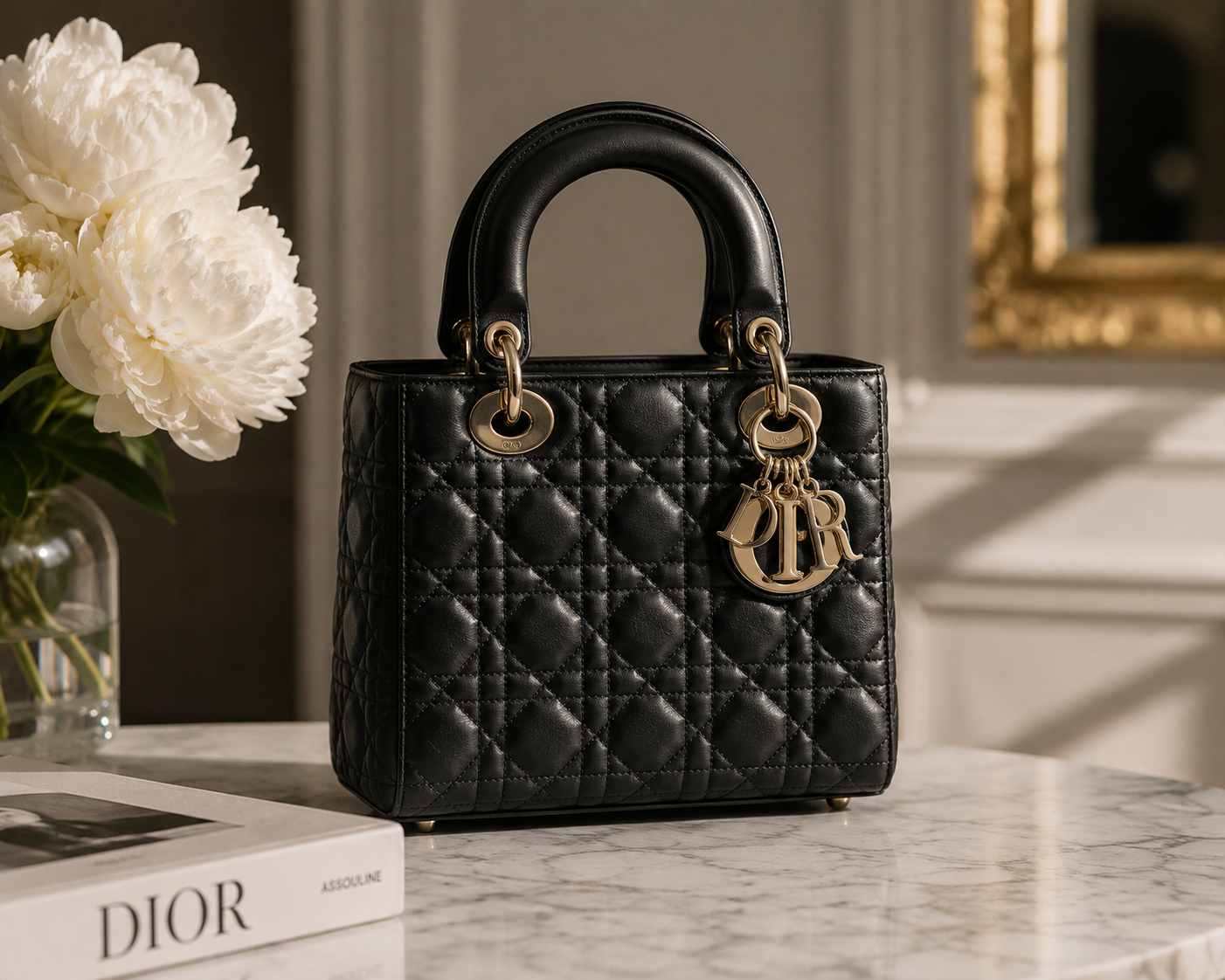
Few handbags have become as closely associated with modern elegance as the Lady Dior.
Originally introduced in the mid-1990s, the bag achieved worldwide recognition after being gifted to Diana, Princess of Wales, whose frequent appearances carrying it transformed the design into an international icon.
Soon afterwards, the House officially renamed it the Lady Dior.
Its instantly recognisable Cannage quilting, structured silhouette and polished metal charms embody Dior’s commitment to craftsmanship and timeless sophistication.
Unlike many luxury accessories driven by seasonal trends, the Lady Dior has remained remarkably relevant, continuously reimagined through new colours, materials and artistic collaborations while preserving its unmistakable identity.
Today, it remains one of the defining symbols of the House.
Miss Dior
Fashion was never Christian Dior’s only language.
Fragrance became equally important from the very beginning.
Launched alongside the House’s first couture collection in 1947, Miss Dior represented Dior’s ambition to create a complete world rather than simply beautiful clothing.
Named after his sister Catherine Dior, the fragrance reflected elegance through scent just as the New Look expressed it through silhouette.
More than seventy years later, Miss Dior continues to evolve while preserving its original emotional identity, demonstrating how fragrance can become an essential part of a luxury maison’s heritage.
The Saddle Bag
When John Galliano introduced the Dior Saddle Bag in 1999, its unconventional shape immediately challenged traditional handbag design.
Inspired by an equestrian saddle, the silhouette became one of the defining accessories of the early 2000s.
Like many influential fashion pieces, its popularity eventually faded before experiencing a remarkable revival nearly two decades later.
The Saddle Bag’s return illustrated one of luxury fashion’s most fascinating qualities:
True icons rarely disappear.
They simply wait for a new generation to rediscover them.
Its revival also reflected the growing influence of archival fashion, where heritage collections increasingly inspire contemporary wardrobes.
J’adore
If Miss Dior represents the House’s origins, J’adore symbolises its modern evolution.
Introduced in 1999, the fragrance became one of the world’s most recognisable luxury perfumes, celebrated for both its sophisticated composition and memorable advertising campaigns.
Over the years, ambassadors including Charlize Theron helped establish J’adore as one of the defining beauty icons of contemporary luxury.
Together, Miss Dior and J’adore demonstrate how the House has extended its identity beyond couture, proving that elegance can be expressed through fragrance as powerfully as through fashion.
Dior Beyond Fashion
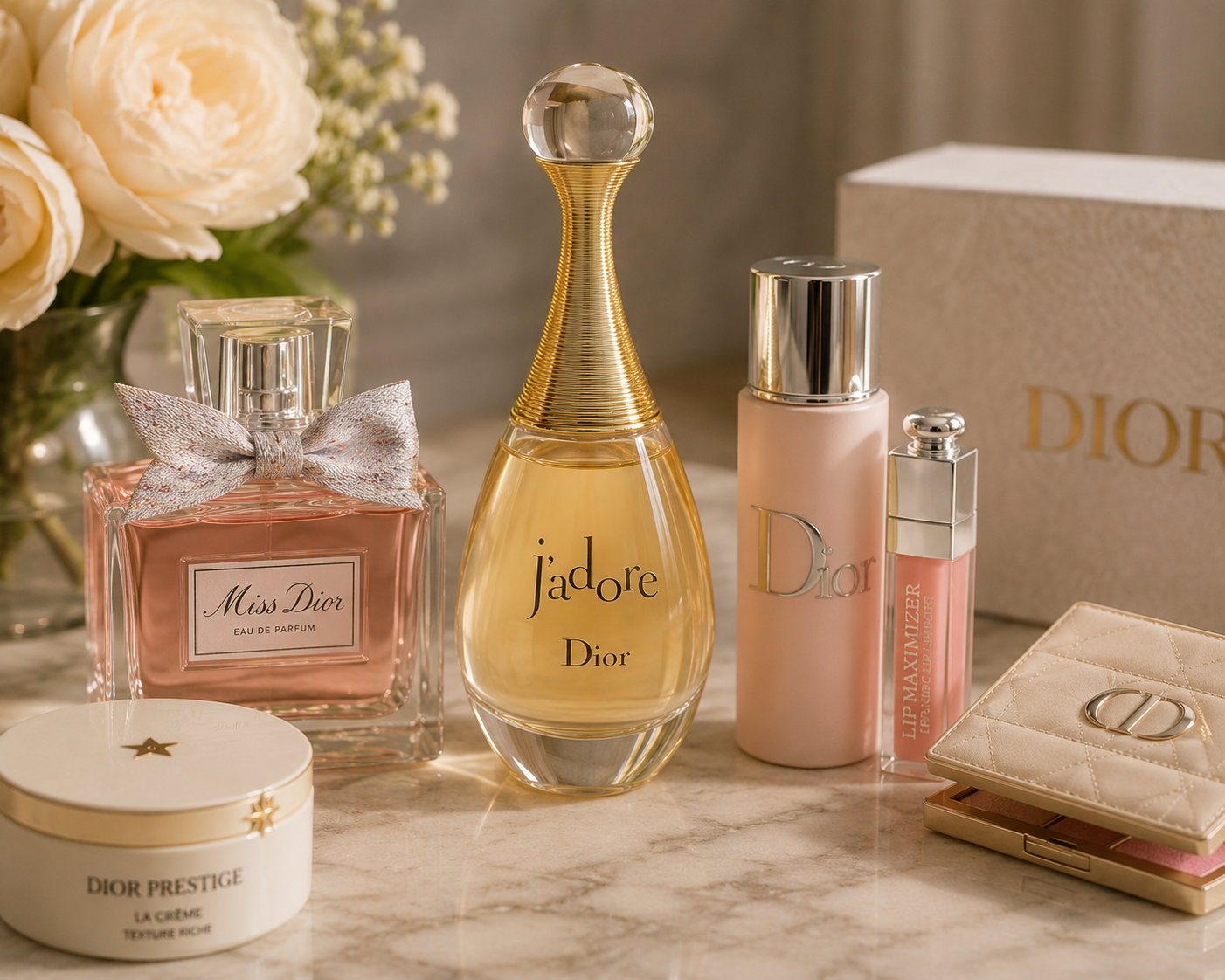
Although couture remains its creative heart, Dior has evolved into one of the most influential luxury lifestyle brands in the world.
Today, the House operates across ready-to-wear, leather goods, jewellery, watches, beauty and fragrance, creating a complete universe rather than a single fashion label.
Its beauty division has introduced some of the industry’s most recognisable products, while Dior Fine Jewellery continues to reinterpret the House’s floral inspirations through exceptional craftsmanship.
The watch collections similarly combine Swiss precision with Parisian elegance, reflecting the same attention to detail found throughout Dior’s couture ateliers.
This broader vision mirrors the evolution of modern luxury itself, where heritage brands increasingly create immersive lifestyles rather than individual products.
The philosophy is shared across many leading maisons, including those explored in Best Luxury Watch Brands: The Complete Guide to the World’s Finest Timepieces, where craftsmanship and heritage remain the defining characteristics of lasting luxury.
Celebrity culture has also played an important role in Dior’s global influence.
From Princess Diana to Jennifer Lawrence, Natalie Portman, Robert Pattinson, Anya Taylor-Joy and countless international ambassadors, the House has consistently collaborated with individuals whose personal style reflects Dior’s vision of elegance rather than fleeting popularity.
At the same time, exhibitions such as La Galerie Dior in Paris have reinforced the House’s cultural importance, presenting couture as both fashion and art.
Institutions including the Victoria and Albert Museum and The Metropolitan Museum of Art have similarly showcased Dior creations within major exhibitions, recognising the House’s lasting contribution to design history.
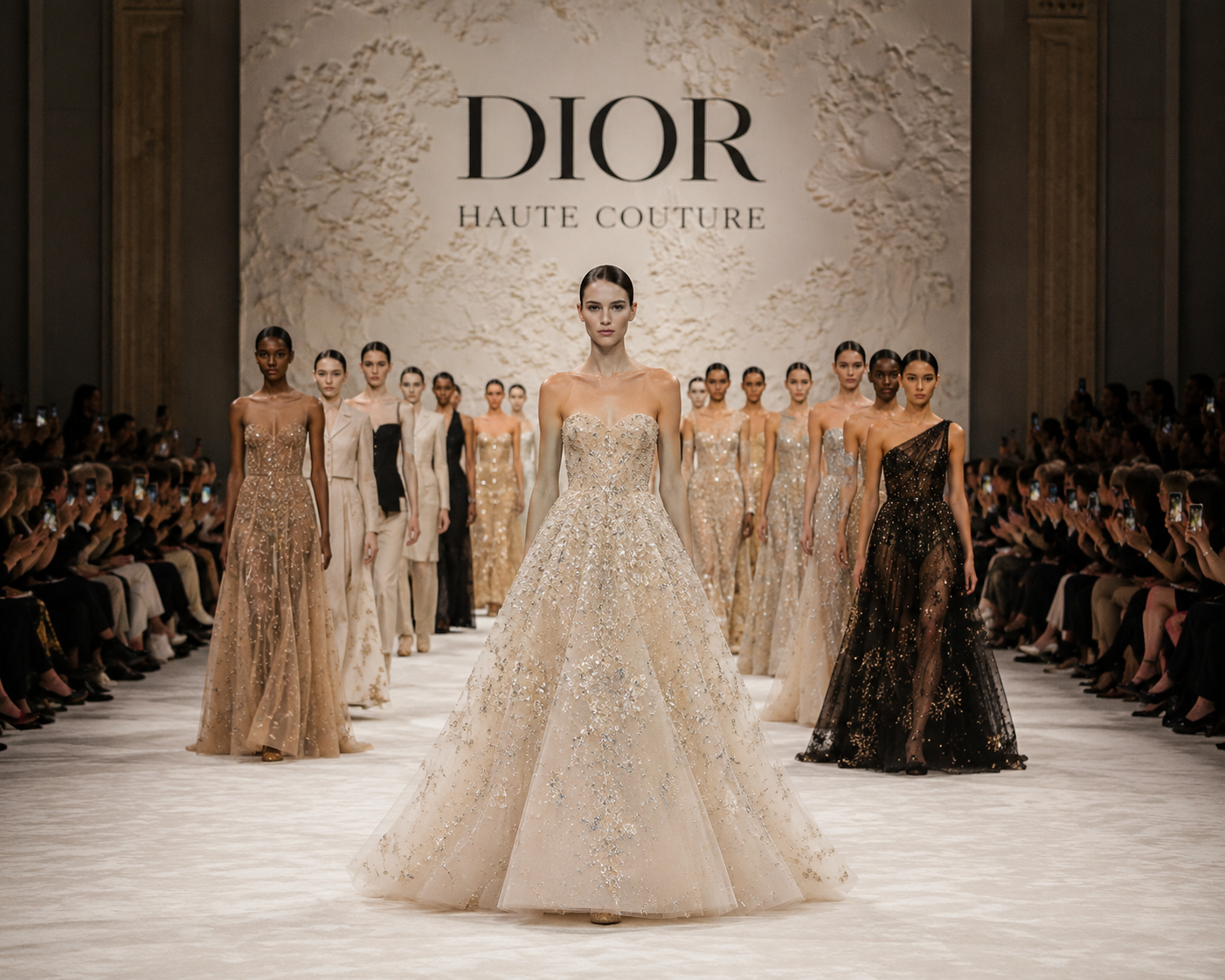
Why Dior Still Defines Modern Luxury
Luxury changes constantly.
Consumer expectations evolve.
Creative directors change.
Technology transforms how fashion is experienced.
Yet Dior continues to remain remarkably relevant.
Its enduring influence comes from a rare balance between heritage and innovation.
Rather than preserving Christian Dior’s vision as something untouchable, the House allows each generation to reinterpret it through contemporary culture while respecting the craftsmanship that has always defined the maison.
This ability to evolve explains why Dior continues to dominate conversations during Paris Haute Couture Week, inspire exhibitions around the world and remain one of the most influential names within the LVMH portfolio.
According to LVMH, Dior continues to play a central role in the global luxury industry through its commitment to creativity, exceptional craftsmanship and long-term investment in artisanal excellence.
At SWORD Arabia, we believe Dior’s greatest achievement is not simply creating beautiful clothing.
It is demonstrating that true luxury does not stand still.
It evolves with confidence, respects its past without becoming trapped by it, and continues inspiring each new generation to imagine elegance differently.
That may be Christian Dior’s most enduring legacy.
A legacy that began with one revolutionary collection in 1947 and continues to shape the future of fashion today.