



For years, the beauty industry celebrated flawless matte complexions.
Today, the aspiration looks very different.
Across Seoul, Paris, Dubai and New York, glowing, healthy skin has become the new beauty benchmark—not because it appears heavily made up, but because it reflects something far more enduring: skin that is well cared for.
This luminous complexion has become known as glass skin.
Smooth. Hydrated. Naturally radiant.
The term has become one of the defining concepts of Korean skincare, inspiring countless skincare routines, product launches and viral beauty videos. Yet despite its popularity, glass skin is often misunderstood.
It is not about looking poreless or perfectly airbrushed.
It is not achieved overnight through a single miracle product.
And it certainly isn’t reserved for celebrities or skincare influencers.
At SWORD Arabia, we believe glass skin is best understood not as another beauty trend, but as the visible result of healthy, resilient skin. Behind every luminous complexion lies consistent care, a strong skin barrier, thoughtful hydration and realistic expectations.
Rather than chasing perfection, the goal is to help your skin function at its healthiest, allowing its natural radiance to emerge over time.
What Is Glass Skin?
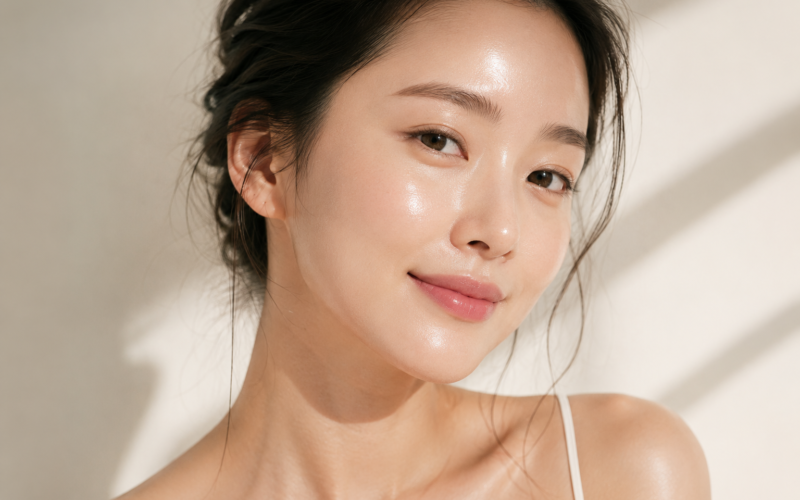
The phrase glass skin originated in South Korea to describe skin that appears exceptionally smooth, deeply hydrated and naturally reflective, almost like a sheet of clear glass.
Unlike makeup trends that rely on highlighters or heavy foundation, glass skin focuses on improving the skin itself.
Its defining characteristics include:
- Deep hydration
- Even skin tone
- Smooth texture
- Healthy elasticity
- Natural luminosity
- A strong skin barrier
Perhaps most importantly, glass skin is not intended to erase pores, freckles or natural skin texture.
Healthy skin still has pores.
Healthy skin still changes throughout the month.
Healthy skin is not perfect.
Instead, Korean beauty philosophy encourages long-term skin health through gentle daily habits rather than aggressive treatments.
This approach has helped make K-Beauty one of the world’s most influential beauty movements, placing prevention, hydration and consistency above quick fixes.
If you’re new to Korean skincare, our Korean Skincare Guide: Why K-Beauty Continues to Lead the Global Beauty Industry explores the philosophy behind these routines in greater depth.
Why Glass Skin Is About Healthy Skin, Not Perfection
One reason the glass skin trend has endured is that it shifts attention away from covering the skin and toward caring for it.
Rather than asking, “How can I hide imperfections?”, it asks, “How can I help my skin become healthier?”
That distinction changes everything.
A healthy complexion naturally reflects light more evenly because the skin surface is smoother, better hydrated and less inflamed.
This is why dermatologists often emphasize skin health before recommending cosmetic improvements.
According to the American Academy of Dermatology, protecting the skin barrier and maintaining consistent hydration are among the most important foundations of healthy skin.
Glass skin therefore has less to do with genetics than many people assume.
While genetics certainly influence pore size, pigmentation and oil production, daily skincare habits have a significant impact on hydration, barrier health and overall skin appearance.
The glow associated with glass skin is not created by oil.
It comes from balanced hydration and healthy skin function.
Hydration Comes Before Glow
When people think about glowing skin, they often imagine adding shimmer or facial oils.
In reality, the healthiest glow begins much deeper.
Well-hydrated skin reflects light more evenly because its outer layer remains smooth, flexible and resilient.
Ingredients commonly found in Korean skincare—including Hyaluronic Acid, Glycerin and Panthenol—help attract and retain moisture, allowing the skin to appear plumper and healthier.
Hydration also supports elasticity, making fine lines appear softer while improving overall texture.
Without adequate hydration, even expensive skincare products struggle to perform effectively.
A Healthy Skin Barrier Changes Everything
Perhaps no concept has become more important in modern skincare than the skin barrier.
The skin barrier is the outer protective layer responsible for keeping moisture in while shielding the skin from pollution, bacteria and environmental stress.
When this barrier becomes damaged, the skin may experience:
- Dryness
- Irritation
- Redness
- Breakouts
- Increased sensitivity
- Dehydration
Many people mistakenly respond by adding more active ingredients.
Often, the opposite approach is needed.
Supporting the barrier with gentle cleansing, moisturizers rich in Ceramides, and calming ingredients such as Centella Asiatica frequently delivers better long-term results than constantly introducing stronger products.
Our guide How to Know Your Skin Type: The First Step to Better Skincare explains why understanding your skin’s natural behaviour is essential before choosing products or building a routine.
Consistency Matters More Than Complexity
One of the biggest misconceptions surrounding glass skin is that achieving it requires a ten-step routine.
While Korean skincare popularized layered routines, today’s dermatologists and many Korean skincare experts increasingly favour simpler routines tailored to individual needs.
Consistency almost always outperforms complexity.
A gentle cleanser used every day is more valuable than an expensive treatment used inconsistently.
Daily sunscreen has a greater long-term impact than occasional luxury facials.
Healthy habits repeated over months matter far more than dramatic overnight transformations.
Can Everyone Achieve Glass Skin?
This is perhaps the most frequently asked question.
The honest answer is:
Not everyone will achieve the exact same version of glass skin.
And that’s perfectly normal.
Every complexion is shaped by a unique combination of genetics, hormones, age, climate and lifestyle.
Someone living in Dubai’s dry climate will face different skincare challenges from someone living in Seoul’s humid summers.
Likewise, conditions such as acne, rosacea, eczema or hyperpigmentation may influence how skin reflects light.
The goal should never be to copy someone else’s complexion.
Instead, aim to achieve the healthiest version of your own skin.
For some people, that may mean reducing dehydration.
For others, strengthening the skin barrier.
For others still, calming inflammation or improving texture over time.
Glass skin should therefore be viewed as a philosophy rather than a fixed appearance.
It encourages patience instead of perfection.
Progress instead of comparison.
And healthier skin rather than flawless skin.
That mindset is perhaps the greatest lesson Korean beauty has shared with the rest of the world.
The Essential Glass Skin Routine
One reason glass skin has remained one of the defining concepts of Korean skincare is that it isn’t built around a single product. Instead, it reflects a consistent routine where every step supports the skin’s natural ability to stay hydrated, balanced and resilient.
The goal is not to overwhelm your skin with dozens of products.
It is to give your skin exactly what it needs, nothing more, nothing less.
1. Start with Gentle Cleansing
Every effective glass skin routine begins with clean skin.
Throughout the day, sunscreen, makeup, excess oil and pollution accumulate on the skin’s surface. Removing them is essential, but cleansing should never leave your face feeling tight or stripped.
Choose a gentle cleanser that respects the skin barrier while effectively removing impurities.
If you wear makeup or water-resistant sunscreen daily, double cleansing in the evening can help cleanse thoroughly without excessive scrubbing—a technique that has become one of the foundations of modern K-Beauty.
2. Replenish Moisture with a Hydrating Toner
Forget the alcohol-based toners that once promised to eliminate every trace of oil.
Today’s hydrating toners have a very different purpose.
They immediately replace moisture after cleansing, preparing the skin to absorb the products that follow.
Ingredients such as Hyaluronic Acid, Glycerin and Panthenol help restore hydration, leaving skin feeling comfortable rather than tight.
Healthy skin absorbs skincare more effectively when it is properly hydrated from the very beginning of the routine.
3. Essence: The Signature Step of Korean Skincare
If there is one step that distinguishes Korean skincare routines, it is the essence.
An essence is typically lighter than a serum but richer than a toner, delivering lightweight hydration while supporting the skin barrier over time.
Many formulas contain ingredients such as fermented extracts, rice extract or soothing botanical ingredients designed to improve overall skin health rather than provide dramatic overnight results.
This gradual philosophy reflects one of K-Beauty’s core principles: healthy skin is built through consistency.
4. Target Specific Concerns with a Serum
Once hydration has been established, a serum allows you to address your individual skin concerns.
Different ingredients support different goals:
- Niacinamide helps improve uneven skin tone while balancing excess oil.
- Hyaluronic Acid attracts moisture for long-lasting hydration.
- Centella Asiatica calms irritation and supports barrier repair.
- Snail Mucin promotes hydration while helping improve skin texture.
- Ceramides strengthen the skin’s protective barrier.
- Rice Extract contributes to brighter, smoother-looking skin.
Rather than layering multiple active ingredients simply because they are trending, focus on choosing one or two that match your skin’s needs.
Healthy skin responds better to consistency than excess.
5. Lock Everything In with Moisturizer
A common misconception is that moisturizers simply add hydration.
In reality, they help prevent moisture from escaping throughout the day.
This is especially important because skin naturally loses water through a process known as Transepidermal Water Loss (TEWL).
A well-formulated moisturizer creates a protective seal, helping maintain hydration while supporting a healthy skin barrier.
Even oily skin benefits from daily moisturization.
Skipping moisturizer often encourages the skin to compensate by producing even more oil.
6. Never Skip Sunscreen
No glass skin routine is complete without daily sunscreen.
Sun exposure remains one of the biggest contributors to dehydration, pigmentation, premature ageing and weakened skin barrier function.
Even the most carefully designed skincare routine cannot fully protect your skin if ultraviolet damage goes unchecked.
A broad-spectrum SPF should be the final step of every morning routine, regardless of the season or whether you plan to stay indoors for much of the day.
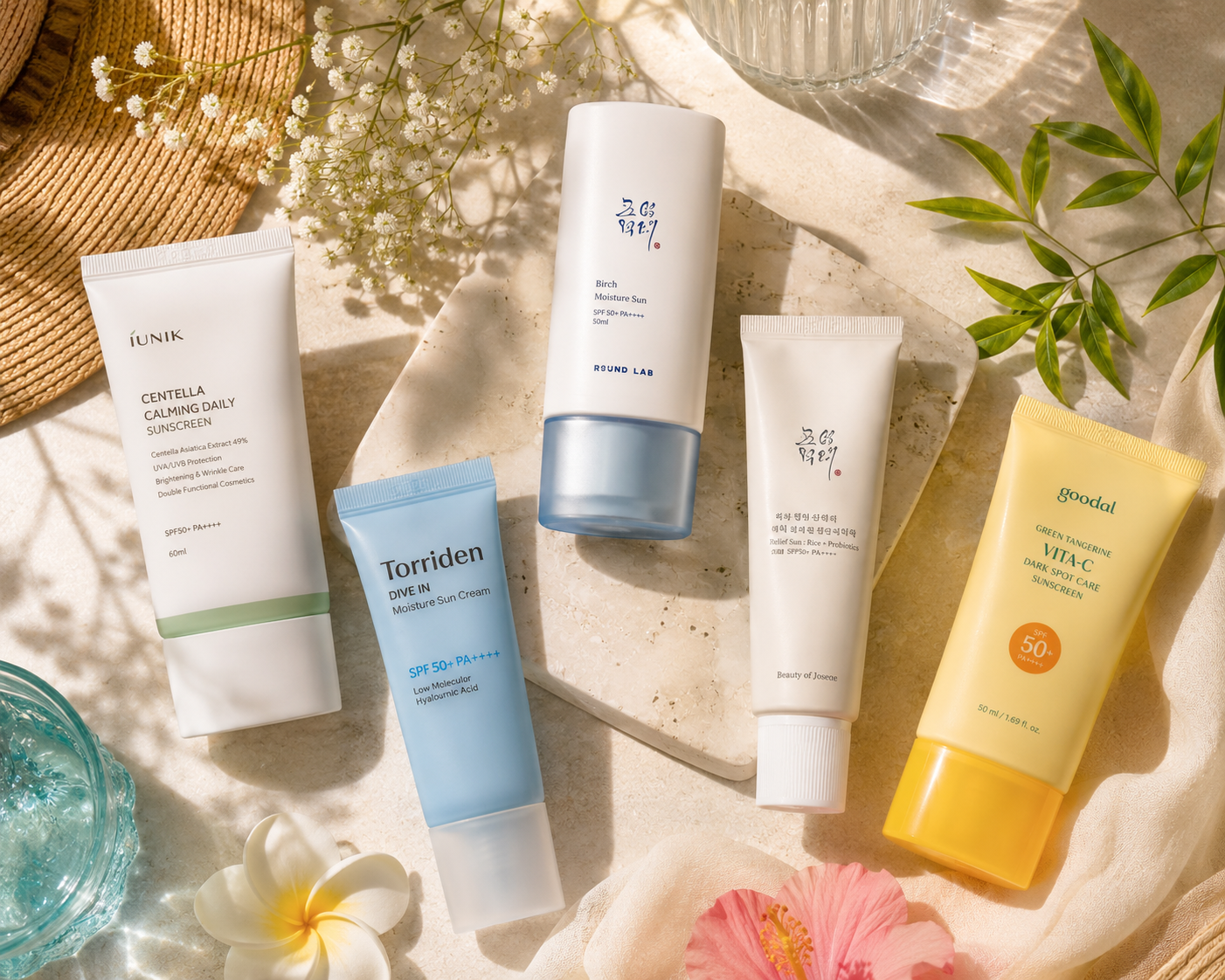
If you’re unsure which formula suits your complexion, our guide Best Korean Sunscreens for Every Skin Type explores options for different skin needs.
You can also learn how your skincare should change throughout the day in Morning vs Evening Skincare Routine: What Your Skin Really Needs at Different Times of Day.
How Long Does It Take to Achieve Glass Skin?
One of the most common questions surrounding glass skin is how quickly results appear.
The answer depends on your skin type, lifestyle and the condition of your skin barrier, but healthy skin improvements generally happen gradually.
| Timeline | What You May Notice |
|---|---|
| Week 1 | Better hydration and softer skin. |
| Weeks 2–4 | Improved comfort, smoother texture and reduced dryness. |
| Weeks 4–8 | Healthier skin barrier with a more even, natural glow. |
| Around 3 Months | Consistent hydration, improved texture and noticeably healthier-looking skin. |
The most significant transformation isn’t necessarily brighter skin.
It’s healthier skin that functions as it should.
Common Myths About Glass Skin
The popularity of glass skin has also created unrealistic expectations. Separating fact from fiction helps build healthier habits.
Myth: Glass skin means poreless skin.
Reality: Healthy skin has visible pores. Glass skin is about smoothness and hydration—not eliminating natural skin texture.
Myth: You need ten skincare products.
Reality: A simple, consistent routine is often more effective than using numerous products without purpose.
Myth: Glass skin is only for young people.
Reality: Healthy, hydrated skin is possible at every age. Skin naturally changes over time, but supporting the skin barrier remains beneficial throughout life.
Myth: Oily skin already has glass skin.
Reality: Oil and hydration are not the same thing. Oily skin can still be dehydrated and have a damaged skin barrier.
Myth: Expensive products create glass skin.
Reality: Consistency, gentle skincare and patience matter far more than price.
Glass Skin vs Dewy Skin
Although the terms are often used interchangeably, they are not identical.
Glass skin is a skincare philosophy centred on long-term skin health. It focuses on hydration, barrier support and improving the complexion itself.
Dewy skin, meanwhile, describes a fresh, luminous finish that can be achieved through both skincare and makeup.
In other words:
- Glass skin begins with healthy skin.
- Dewy skin can also be created cosmetically.
Many makeup artists use illuminating primers or highlighters to create a dewy finish, whereas glass skin aims to achieve radiance before makeup is even applied.
Frequently Asked Questions
Can everyone achieve glass skin?
Everyone can improve their skin’s hydration and overall health, but results will vary depending on genetics, skin conditions and lifestyle.
Does oily skin naturally look like glass skin?
Not necessarily. Excess oil does not equal healthy hydration. True glass skin reflects balanced, healthy skin rather than simply a shiny complexion.
How many products do I need?
There is no perfect number. Most people achieve excellent results with a simple routine built around cleansing, hydration, moisturising and daily sun protection.
Which ingredients are best for glass skin?
Hydrating and barrier-supporting ingredients such as Hyaluronic Acid, Ceramides, Niacinamide, Centella Asiatica, Snail Mucin and Rice Extract are among the most widely used in Korean skincare.
Is makeup necessary to achieve glass skin?
No. While makeup can create a luminous finish, glass skin is fundamentally about improving the condition of the skin itself.
The Final Word
The beauty of glass skin has never been that it looks identical on everyone.
It doesn’t.
Every complexion reflects its own genetics, environment, lifestyle and experiences.
What makes the concept so enduring is not its appearance but its philosophy.
Healthy skin.
Protected skin.
Patient skincare.
At SWORD Arabia, we believe the most beautiful complexion isn’t the one that looks filtered or flawless. It’s the one that feels healthy, resilient and genuinely cared for.
Because true radiance is never created overnight.
It is built through thoughtful routines, consistent habits and an understanding that healthy skin will always outshine the latest beauty trend.