




Have you ever invested in a skincare product that everyone seemed to love, only to discover it did little, or even made your skin feel worse?
It’s a familiar experience. A cleanser praised by influencers leaves your face feeling tight. A rich moisturizer recommended by a friend triggers unexpected breakouts. Even the best sunscreen can feel uncomfortable if it isn’t suited to your skin.
The problem often isn’t the product itself.
It’s that it wasn’t designed for your skin type.
In a beauty industry overflowing with cleansers, serums, moisturizers and trending ingredients, understanding how to find your skin type remains the most important step before building any skincare routine. Without that foundation, even premium products may fail to deliver the results you expect.
At SWORD Arabia, we believe beautiful skin doesn’t begin with buying more skincare—it begins with understanding the skin you already have. Once you know how your skin naturally behaves, choosing products becomes less confusing, routines become more effective, and long-term skin health becomes much easier to maintain.
Whether you’re building your first skincare routine or refining an existing one, identifying your skin type is where every successful journey starts.
Why Your Skin Type Matters
Every skincare decision, from selecting a gentle cleanser to choosing the right sunscreen, depends on one simple question:
What is your skin type?
Your skin type determines how much natural oil (sebum) your skin produces, how well it retains moisture, and how likely it is to react to certain ingredients. It influences everything from texture and hydration to breakouts and sensitivity.
This is why two people can use the exact same skincare product and experience completely different results.
Someone with oily skin may appreciate a lightweight gel moisturiser, while someone with dry skin could find the same formula completely inadequate. Likewise, a cleanser designed to reduce excess oil may work beautifully for one person but leave another with irritation and tightness.
Understanding your skin also helps protect your skin barrier, the outermost layer responsible for locking in moisture and defending against environmental stressors. When your skincare routine matches your skin’s natural needs, the barrier remains healthier, stronger and more resilient.
Before exploring advanced ingredients like niacinamide, hyaluronic acid or retinol, it is worth understanding the foundation they are meant to support.
If you’re new to skincare, our Korean Skincare Guide: Why K-Beauty Continues to Lead the Global Beauty Industry explains why personalized routines have become one of the defining principles of modern skincare.
The Five Main Skin Types
While everyone’s skin is unique, dermatologists generally classify skin into five main categories. Knowing which one most closely describes your skin makes it significantly easier to choose products that genuinely support your complexion.
| Skin Type | Typical Characteristics | Common Concerns |
|---|---|---|
| Normal Skin | Balanced oil and moisture | Occasional dryness or blemishes |
| Dry Skin | Tight, rough or flaky | Dehydration, irritation |
| Oily Skin | Excess shine and enlarged pores | Breakouts, congestion |
| Combination Skin | Oily T-zone with drier cheeks | Mixed skincare needs |
| Sensitive Skin | Easily irritated or reactive | Redness, burning, discomfort |
Normal Skin
Normal skin is often considered the ideal balance between oil production and hydration.
It generally feels comfortable throughout the day, with few visible pores, minimal sensitivity and only occasional blemishes. While normal skin requires less corrective skincare, it still benefits from gentle cleansing, daily sunscreen and consistent hydration to maintain its natural balance.
Rather than chasing trends, the goal is preserving healthy skin over time.
Dry Skin
Dry skin produces less natural oil than it needs, often leaving the complexion feeling tight, rough or uncomfortable after cleansing.
Fine lines may appear more noticeable, while flaky patches and dullness are common, particularly in colder weather or air-conditioned environments.
Ingredients such as ceramides, hyaluronic acid and glycerin help replenish moisture while supporting the skin barrier. Harsh foaming cleansers and alcohol-heavy formulas are generally best avoided.
It is also important not to confuse dry skin with dehydrated skin—a distinction many people overlook. Dry skin is a skin type, whereas dehydration is a temporary condition caused by a lack of water, and it can affect any skin type, including oily skin.
Oily Skin
Oily skin is characterised by increased sebum production, often resulting in visible shine, enlarged pores and a greater tendency toward acne and congestion.
Although excess oil is frequently viewed negatively, sebum plays an essential role in protecting the skin and preventing moisture loss. The goal is not to eliminate oil entirely but to keep it balanced.
Lightweight, non-comedogenic moisturizers, gentle cleansers and ingredients such as salicylic acid and niacinamide can help regulate excess oil without disrupting the skin barrier.
Contrary to popular belief, oily skin still needs moisturizer.
Skipping hydration can actually encourage the skin to produce even more oil.
Combination Skin
Combination skin is the most common, and often the most misunderstood, skin type.
Typically, the forehead, nose and chin (known as the T-zone) appear oilier, while the cheeks remain normal or dry.
This means different areas of the face have different needs.
Rather than treating the entire face the same way, combination skin often benefits from lightweight hydration overall while addressing oilier areas with targeted products when necessary.
Finding this balance takes observation rather than guesswork.
Sensitive Skin
Sensitive skin is less about oil production and more about how easily the skin reacts to external triggers.
Redness, itching, burning or irritation may occur after introducing new skincare products, environmental changes or even stress.
While sensitive skin can exist alongside dry, oily or combination skin, maintaining a healthy skin barrier is often the priority.
Gentle, fragrance-free formulations containing soothing ingredients such as Centella Asiatica are frequently recommended for reducing irritation and supporting long-term skin comfort.
As the American Academy of Dermatology notes, a simplified skincare routine is often more effective than using multiple active ingredients simultaneously.
Skin type is only the beginning of understanding your complexion.
The next step is learning how to identify it accurately at home—without expensive equipment or professional testing.
How to Identify Your Skin Type at Home
The good news is that you don’t need expensive equipment or a dermatologist’s appointment to understand your skin.
While a professional assessment can be helpful for persistent skin concerns, several simple at-home methods can give you a reliable indication of your natural skin type. The key is to observe how your skin behaves when it isn’t influenced by makeup, heavy skincare products or environmental factors.
The Bare Face Test
One of the easiest and most reliable ways to identify your skin type is the bare face test.
Start by washing your face with a gentle cleanser that doesn’t contain exfoliating acids or active ingredients. Pat your skin dry with a clean towel and avoid applying any skincare products—not even moisturizer.
Then, wait for around 30 to 60 minutes.
During this time, allow your skin to return to its natural state before examining how it feels and looks.
Here’s what to look for:
- Normal skin feels comfortable, balanced and neither oily nor tight.
- Dry skin often feels tight, rough or slightly flaky.
- Oily skin develops noticeable shine, especially across the forehead, nose and chin.
- Combination skin appears oily through the T-zone while remaining comfortable or dry on the cheeks.
- Sensitive skin may become red, itchy, irritated or uncomfortable even without applying products.
This simple skin type test is often enough to identify your skin’s natural tendencies.
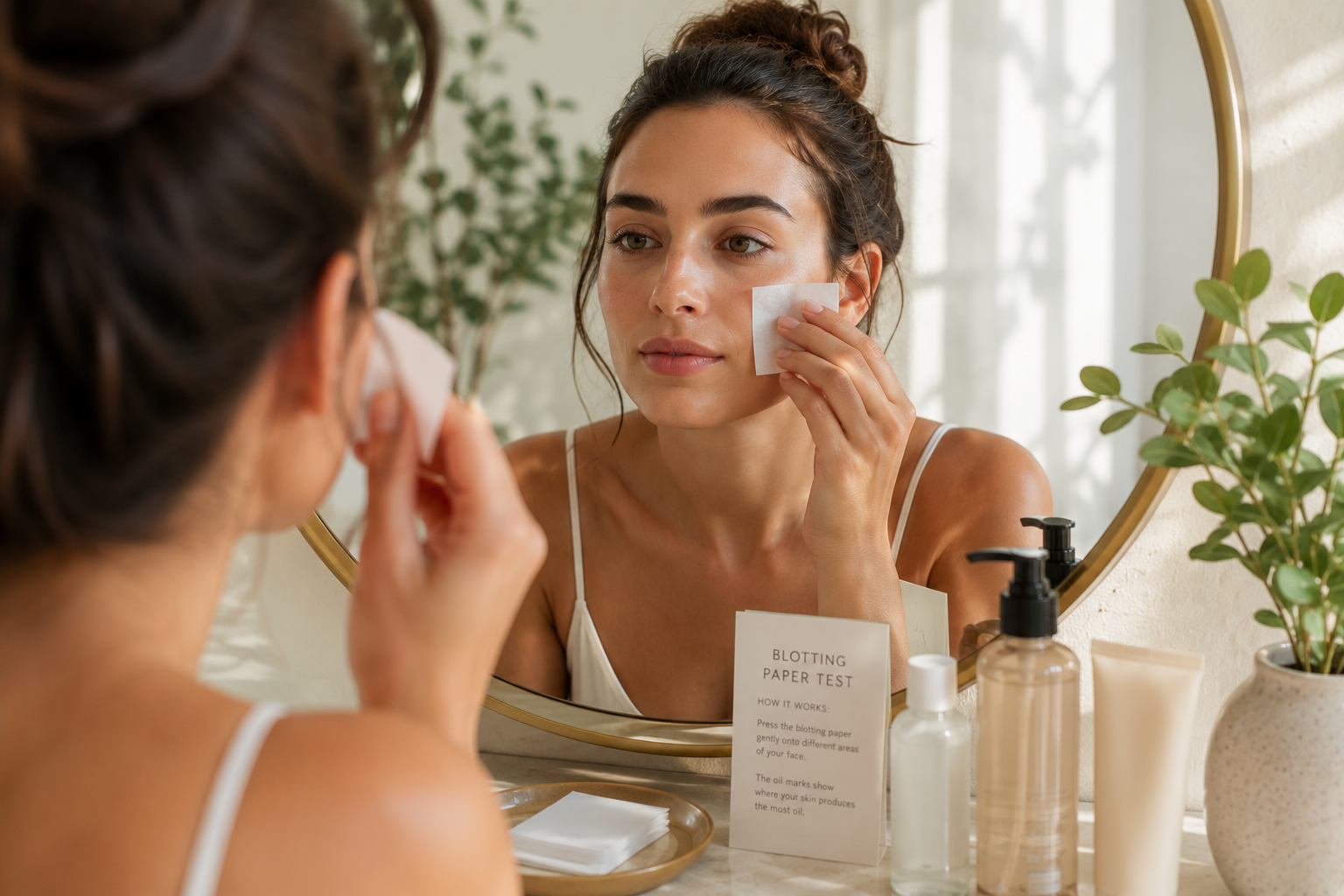
The Blotting Paper Test
If you’re unsure whether your skin is oily or combination, the blotting paper test offers another useful clue.
About two hours after cleansing, gently press blotting paper onto different areas of your face.
Then compare the amount of oil collected.
- Very little oil usually indicates dry or normal skin.
- Oil mainly on the forehead, nose and chin often suggests combination skin.
- Oil across most areas of the face generally points to oily skin.
Remember that this test measures sebum production, not hydration.
Skin can appear oily while still being dehydrated, which is why observing both shine and comfort is important.
When Should You Observe Your Skin?
Your skin changes throughout the day.
For the most accurate results, avoid testing immediately after:
- Intense exercise
- Long periods in direct sunlight
- Wearing heavy makeup
- Applying rich skincare products
- Hot showers
Instead, perform the test on a typical day when your skin is behaving naturally.
Consistency is more valuable than a single observation.
Can Your Skin Type Change?
One of the biggest skincare myths is that your skin type remains the same forever.
In reality, your skin constantly responds to both internal and external factors.
Hormonal changes can increase oil production.
Stress may trigger sensitivity or breakouts.
Air conditioning, dry climates and winter weather can leave even oily skin feeling dehydrated.
As we age, natural oil production generally decreases, meaning skin often becomes drier over time.
Certain medications, pregnancy, diet and lifestyle changes may also influence how your skin behaves.
Rather than assuming your skincare routine should stay the same for years, it’s worth reassessing your skin every few months.
Healthy skincare is about adapting—not following the exact same routine forever.
This is one reason why personalized skincare has become central to K-Beauty, where routines evolve according to the skin’s changing needs rather than rigid rules.
Common Skincare Mistakes
Even after identifying their skin type, many people unintentionally make choices that work against their skin rather than supporting it.
Confusing Dry Skin with Dehydrated Skin
This is perhaps the most common mistake.
Dry skin lacks oil.
Dehydrated skin lacks water.
Even someone with oily skin can experience dehydration if their skin barrier has been compromised.
Assuming Acne Always Means Oily Skin
Breakouts can occur on every skin type.
Hormones, stress, irritation and damaged skin barriers all contribute to acne—not just excess oil.
Over-Cleansing
Washing your face repeatedly may feel like the right response to oily skin, but excessive cleansing often strips away natural oils.
The skin frequently responds by producing even more sebum.
Gentle cleansing twice daily is usually sufficient for most people.
Following Someone Else’s Routine
A skincare routine that transforms one person’s complexion may do very little for someone else.
Your skin is influenced by genetics, climate, hormones and lifestyle.
The best routine is always the one built around your skin, not someone else’s.
Choosing Products Based on Your Skin Type
Once you know your skin type, selecting skincare products becomes much more straightforward.
Rather than chasing every new launch, focus on products that support your skin’s natural needs.
- Normal Skin: Gentle cleanser, lightweight moisturizer and daily sunscreen.
- Dry Skin: Cream cleansers, ceramide-rich moisturizers and hydrating ingredients like Hyaluronic Acid and Glycerin.
- Oily Skin: Lightweight, non-comedogenic moisturizers with Niacinamide or Salicylic Acid to help balance excess oil.
- Combination Skin: Lightweight hydration with targeted treatments for oilier areas when needed.
- Sensitive Skin: Fragrance-free formulas containing soothing ingredients such as Centella Asiatica, while avoiding unnecessary active ingredients.
Daily sun protection is essential for every skin type.
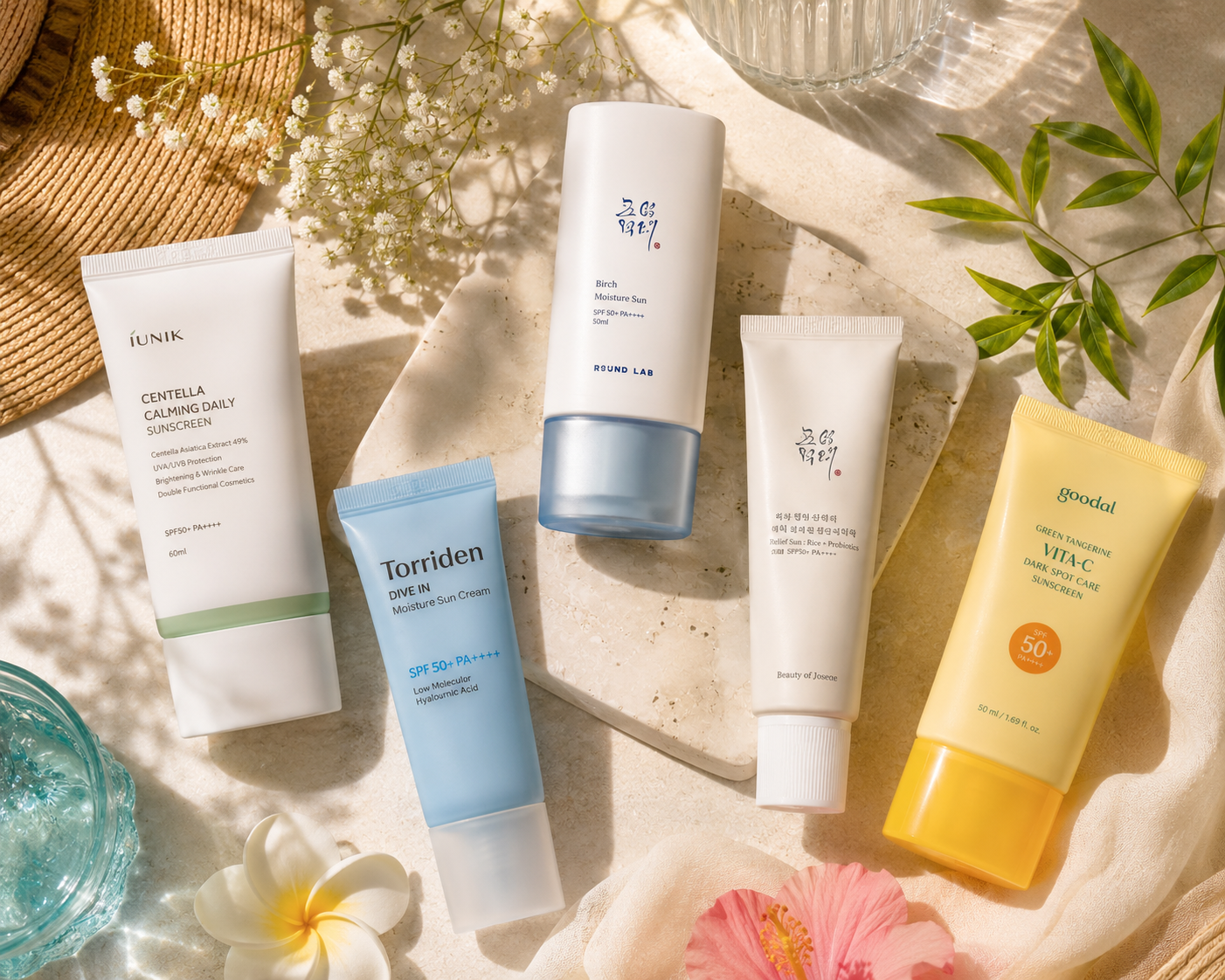
Our guide to Best Korean Sunscreens for Every Skin Type explains how to choose a sunscreen that matches your skin’s individual needs, while Morning vs Evening Skincare Routine: What Your Skin Really Needs at Different Times of Day explores how routines should adapt throughout the day.
Frequently Asked Questions
What are the five main skin types?
The five primary skin types are normal, dry, oily, combination and sensitive skin.
Can I have more than one skin type?
Yes. Combination skin is extremely common, with different areas of the face producing different amounts of oil.
Is sensitive skin a skin type?
Sensitive skin is often considered a skin condition rather than a true skin type, as it can occur alongside dry, oily, normal or combination skin.
Why do skincare products work for some people but not others?
Because every person’s skin differs in oil production, hydration levels, genetics, environment and skin barrier health.
When should I see a dermatologist?
If you experience persistent acne, severe sensitivity, eczema, rosacea or skin concerns that do not improve with an appropriate skincare routine, it’s advisable to seek professional medical advice from a dermatologist.
The Final Word
Beautiful skin rarely comes from buying the most expensive products or following every viral skincare trend.
It comes from understanding how your skin naturally behaves and giving it the care it genuinely needs.
At SWORD Arabia, we believe the most effective skincare routine is built on observation rather than imitation. Ingredients, trends and product launches will continue to evolve, but the foundation of healthy skin remains remarkably consistent: understanding your skin before trying to change it.
Once you know your skin type, every decision, from choosing a cleanser and moisturizer to selecting the right sunscreen, becomes more informed, more intentional and far more effective.
Because every successful skincare journey begins with a simple question:
What is your skin trying to tell you?