

The history of Chanel is about far more than the evolution of a luxury fashion house. It is the story of how Gabrielle “Coco” Chanel transformed women’s fashion and built one of the world’s most enduring luxury brands.
Some fashion houses become famous for a particular decade.
Chanel altered the way women dressed for more than a century.
Its influence was not built through ornament alone, but through a succession of ideas that now feel almost inevitable: clothes should allow movement; simplicity can be more radical than excess; and luxury does not need to announce itself loudly to be recognised.
From a small Parisian hat boutique to one of the world’s most influential luxury houses, Chanel’s story is one of transforming personal instinct into an enduring design language. Jersey, black dresses, quilted handbags, two-tone shoes and strands of costume pearls became more than products. They became symbols of a modern femininity that valued independence as much as elegance.
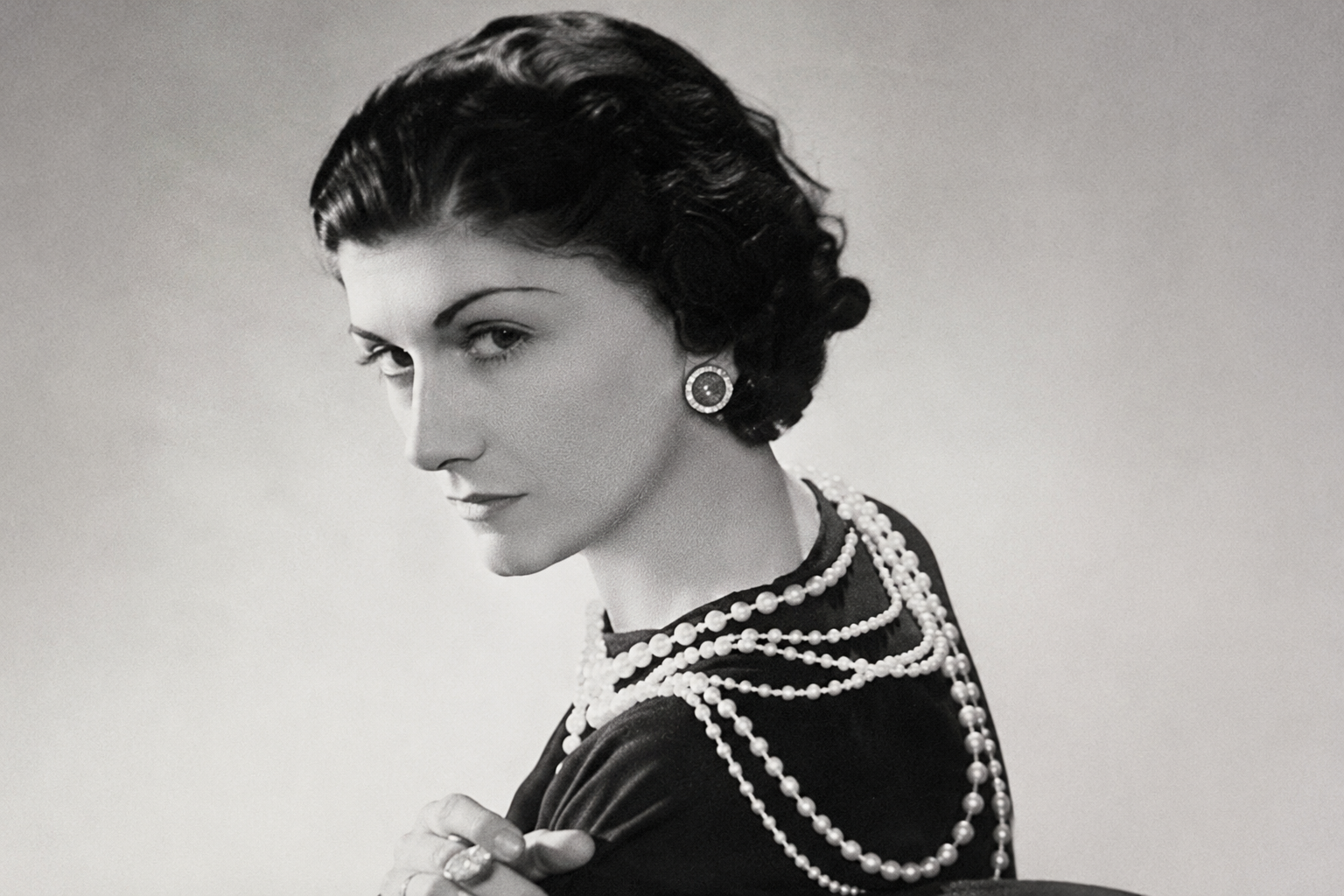
The Woman Behind the History of Chanel: Gabrielle “Coco” Chanel
Gabrielle Chanel was born in Saumur, France, in 1883. Her early life was far removed from the privilege later associated with her name, yet the restraint that defined her aesthetic would become inseparable from her personal mythology.
She rejected the restrictive silhouettes and elaborate decoration that dominated women’s fashion at the beginning of the twentieth century. Instead, she looked toward masculine tailoring, sportswear and the practical ease of garments designed for movement.
The nickname “Coco” emerged during her brief period performing in cafés, but it was through millinery that she began shaping her future. In 1910, she opened Chanel Modes, her first hat boutique in Paris. Two years later, she expanded beyond the capital, developing a clientele drawn to the freshness and simplicity of her designs. (CHANEL)
Her work did not merely respond to changing social expectations for women.
It helped accelerate them.
The Birth of the House of Chanel
Chanel’s first Paris boutique established her reputation, but the opening of shops in Deauville and Biarritz allowed her vision to grow into a complete wardrobe.
In 1913, she began selling sportswear made from jersey, a fabric then associated more closely with men’s undergarments than luxury fashion. Chanel recognised what others had overlooked: jersey was soft, fluid and capable of giving women a freedom of movement that conventional dressmaking denied them.
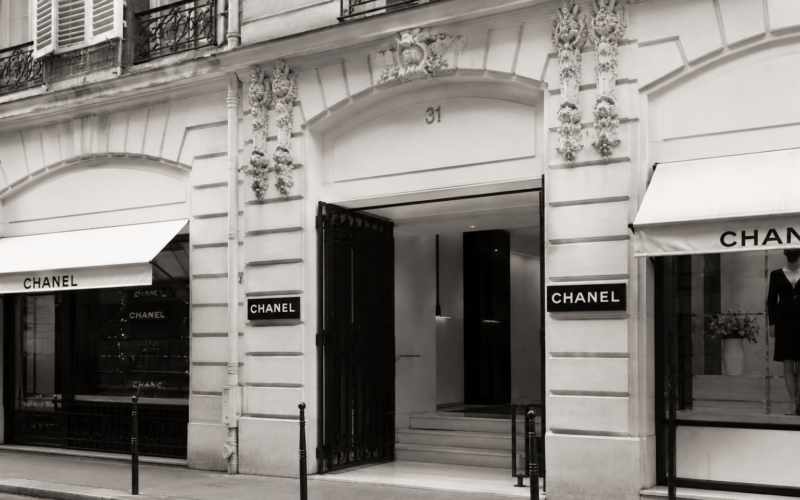
By 1918, she had established the house at 31 Rue Cambon in Paris, the address that remains central to Chanel’s identity.
The location became more than a boutique. It formed the physical and symbolic heart of the maison—a place where fashion, private salons, craftsmanship and Gabrielle Chanel’s own apartment converged.
How Chanel Changed Women’s Fashion
Chanel’s most important contribution was not a single garment.
It was a new idea of how a woman could inhabit her clothes.
Her loose silhouettes, cardigan jackets and practical separates challenged the belief that elegance required discomfort. She borrowed from menswear without attempting to erase femininity, creating an aesthetic that felt both disciplined and liberated.
Jersey played a central role in that transformation. In Chanel’s hands, an ordinary material became sophisticated through proportion and tailoring. The result was clothing that reflected the changing lives of women rather than preserving the constraints of an earlier age.
In 1926, Chanel’s little black dress entered fashion history. Its simplicity made it versatile, modern and accessible as an idea, even when the original garment belonged to luxury fashion. American Vogue famously compared its transformative potential to that of the Ford automobile, while museum collections continue to recognise it as one of Chanel’s most enduring contributions. (The Metropolitan Museum of Art)
The little black dress did not invent black clothing.
It changed what black could represent.
Once associated primarily with mourning and formality, it became a language of confidence, restraint and modern elegance.
Chanel’s influence also sits within the broader tradition of French craftsmanship explored in Haute Couture Explained: What Makes Fashion Truly Couture?, where clothing becomes a record of artistic skill rather than a disposable seasonal object.
The Creations That Became Chanel Codes
Chanel N°5
In 1921, Gabrielle Chanel worked with perfumer Ernest Beaux to create Chanel N°5. She selected the fifth fragrance sample presented to her, giving the perfume its famously spare name.
Its abstract composition and minimalist bottle rejected the romantic conventions of perfumery at the time. N°5 became the first fragrance created by a fashion designer to achieve such lasting cultural reach, extending Chanel from clothing into a complete world of luxury. (CHANEL)
The Chanel Suit
The Chanel suit distilled the maison’s philosophy into a recognisable uniform: a softly structured jacket, practical pockets, precise trim and a coordinating skirt.
Unlike rigid tailoring, it followed the body without imprisoning it. Its appeal came from the tension between polish and ease—a balance that remains central to Chanel today.
The 2.55 Handbag
Introduced in February 1955, the 2.55 handbag gave women something deceptively revolutionary: free hands.
Its quilted body, chain strap and distinctive Mademoiselle lock created a design that was both practical and immediately identifiable. The bag’s name refers to its date of creation, while its construction remains closely connected to couture techniques. (CHANEL)
The Two-Tone Shoe
Chanel’s beige-and-black slingback, introduced in 1957, was designed to lengthen the appearance of the leg while shortening the foot visually. Like so many Chanel creations, it transformed practical thinking into an enduring style code. (Chanel Services)
Together, these objects created a visual vocabulary that could be recognised without a visible logo.
That may be the clearest sign of Chanel’s power.
Chanel After Coco
Gabrielle Chanel died in 1971, leaving behind a house with an extraordinary heritage but an uncertain future. The history of Chanel did not end with Gabrielle Chanel. It entered a new chapter under Karl Lagerfeld.
The decisive transformation arrived in 1983, when Karl Lagerfeld became artistic director. Rather than preserving Chanel as a museum piece, he treated its codes as material for reinvention.Chanel’s relevance does not depend on preserving the past unchanged.
Pearls became oversized. Chains became bolder. Tweed appeared in unexpected colours and proportions. The double-C logo moved confidently into the foreground.
Lagerfeld understood that heritage survives not through repetition, but through reinterpretation. During his decades at the house, he restored the prominence of haute couture, developed Chanel’s ready-to-wear identity and introduced the Métiers d’Art collections celebrating specialist craftsmanship. (CHANEL)
Following his death in 2019, Virginie Viard—his longtime collaborator—led the house through a quieter chapter, favouring wearability, lightness and continuity. She departed in 2024.
Chanel then appointed Matthieu Blazy as artistic director of fashion activities, opening a new creative era. His debut for Spring/Summer 2026 signalled a renewed approach to the house’s heritage, grounded in craft but resistant to nostalgia. (CHANEL)
Why Chanel Remains a Luxury Icon
More than a century after its founding, the history of Chanel continues to shape luxury fashion around the world. Chanel’s relevance does not depend on preserving the past unchanged.
It depends on the strength of the original ideas.
Comfort as liberation.
Simplicity as sophistication.
Craftsmanship as identity.
Those principles continue to shape fashion far beyond Rue Cambon, appearing in the modern return to polished restraint explored in Capri Pants, Kitten Heels and the New Mood of Polished Summer Style.
They also explain why Chanel occupies such a secure place within the broader world of contemporary luxury. As UAE Summer Is Becoming the New Language of Local Luxury reflects, modern luxury increasingly draws its power from cultural meaning, craftsmanship and a clear sense of identity rather than visibility alone.
At SWORD Arabia, we believe the most enduring houses are those whose creations reveal a philosophy before they reveal a label.
Chanel remains one of them.
The history of Chanel is not simply the story of a woman who built a fashion empire. It is the story of how a radical idea of ease became elegance, how practical objects became icons, and how a design philosophy created more than a century ago continues to feel unmistakably modern.
Fashion changes constantly.
Chanel changed the way fashion changes.