


Imagine standing outside an Apple Store on the morning of a new iPhone launch.
The queue stretches around the block.
Most people waiting already own smartphones that work perfectly well. Yet they are prepared to spend hours—sometimes overnight—for the opportunity to own the latest model.
Now imagine the same scene outside a store selling a technically comparable phone from an unfamiliar manufacturer.
It almost never happens.
The difference isn’t simply technology.
It’s the brand.
What makes a great brand is not simply product quality, but the combination of purpose, trust, differentiation, consistency and emotional meaning. Together, these qualities create brand equity—the intangible value that transforms ordinary businesses into companies people remember, recommend and remain loyal to for decades.
Products can be copied. Features eventually become standard. Prices can always be undercut. But great brands create something competitors struggle to replicate: trust, emotional connection and cultural significance.
This is why the world’s most valuable companies are remembered long after individual products disappear. The product may change every year, but the brand remains remarkably consistent.
At SWORD Arabia, we believe the world’s greatest brands are built on the same foundations that define exceptional craftsmanship, luxury fashion and fine watchmaking: clarity of purpose, unwavering consistency and the ability to create meaning far beyond the product itself.
Why Brands Matter More Than Ever
Today’s consumers have more choice than at any other point in history.
Almost every successful product is copied within months. New competitors emerge overnight, while technological advantages become increasingly short-lived.
In this environment, products become commodities.
Brands become competitive advantages.
A strong brand reduces uncertainty. It reassures customers before they make a purchase, creates familiarity in crowded markets and often justifies premium pricing without relying solely on product specifications.
According to the Interbrand Best Global Brands Report, companies with the world’s strongest brands consistently outperform competitors because customers associate them with innovation, quality and trust rather than individual products.
Brand strength also creates pricing power.
Customers are often willing to pay more for brands they trust because those brands reduce perceived risk and deliver consistent experiences.
That emotional relationship is often what separates market leaders from businesses forced into constant price competition.
The Seven Traits of a Great Brand
Every iconic company is different.
Apple, Chanel, LEGO and Patagonia operate in completely different industries, yet they share remarkably similar foundations.
The strongest brands are built on seven enduring principles:
1. Purpose
A clear reason for existing beyond profit.
2. Trust
Delivering on promises consistently over time.
3. Differentiation
Offering something competitors cannot easily replicate.
4. Storytelling
Creating emotional meaning beyond product features.
5. Consistency
Presenting the same identity across every customer touchpoint.
6. Customer Experience
Ensuring every interaction reinforces the brand promise.
7. Adaptability
Continuing to evolve without abandoning the values that made the brand successful in the first place.
These seven principles appear repeatedly across the world’s most admired companies.
Industries may differ.
Technologies may change.
The foundations rarely do.
Every Great Brand Starts with Purpose
Behind every iconic brand lies a remarkably simple idea.
Apple believes technology should feel intuitive.
Nike believes everyone has the potential to achieve greatness.
Patagonia believes business should help protect the planet.
Chanel believed women deserved freedom from restrictive fashion.
Purpose gives every decision direction.
It shapes product development, communication, hiring, customer experience and long-term brand strategy.
Leadership author Simon Sinek’s “Start With Why” argues that people rarely buy only what a company makes—they buy why it exists. While products satisfy practical needs, purpose creates emotional loyalty.
Mission explains what a company does today.
Vision describes where it hopes to go tomorrow.
Core values define how it behaves every step of the way.
When these elements remain aligned, customers begin recognising consistency rather than campaigns.
Purpose also strengthens brand positioning.
Instead of competing only on features or price, companies occupy a distinctive place in customers’ minds. That position becomes increasingly valuable as markets become more crowded.
The strongest brands rarely try to appeal to everyone.
They know exactly who they serve—and why.
Trust Is Every Brand’s Greatest Asset
Branding is often confused with advertising.
In reality, branding begins after the advertisement ends.
Every promise a company makes creates an expectation.
Every customer interaction either reinforces that expectation—or weakens it.
Trust grows through repetition.
Luxury brands understand this particularly well.
When someone purchases a Rolex, they expect extraordinary quality before opening the box. They trust decades of engineering, craftsmanship and reputation built long before that individual watch was manufactured.
Similarly, guests checking into a Ritz-Carlton hotel arrive with clear expectations of service. Every interaction either confirms or challenges the brand’s promise.
This repeated delivery creates brand equity—the long-term value generated by positive experiences, strong recognition and customer confidence.
Brand equity cannot be manufactured overnight.
It accumulates one promise at a time.
Research published by Harvard Business Review consistently highlights trust and consistency as defining characteristics of enduring companies because reliability builds confidence, and confidence creates loyalty.
The result is something far more valuable than awareness.
It becomes reputation.
The Power of Storytelling
Facts explain.
Stories endure.
Ask someone why they admire Nike, and they rarely begin discussing manufacturing techniques or material composition.
Instead, they talk about Michael Jordan.
Serena Williams.
Cristiano Ronaldo.
Perseverance.
Determination.
Possibility.
Nike rarely sells footwear.
It sells ambition.
Luxury brands have mastered this principle for generations.
Chanel does not simply produce handbags and couture collections. It tells an ongoing story about Gabrielle “Coco” Chanel’s determination to redefine elegance, independence and modern femininity—an extraordinary journey explored further in The History of Chanel.
Stories transform products into symbols.
They create emotional branding, allowing customers to see themselves reflected in the companies they choose.
Brand strategist Marty Neumeier famously described a brand as not what a company says about itself, but what people collectively believe about it.
Those beliefs are rarely built through advertising alone.
They emerge from stories customers choose to repeat.
Design Is More Than a Logo
Many people assume branding begins with visual identity.
In reality, visual identity simply makes an existing brand easier to recognise.
Great design communicates values before a single word is spoken.
Apple’s minimalist packaging suggests precision and simplicity.
Hermès’ distinctive orange boxes immediately evoke exclusivity.
IKEA’s blue-and-yellow stores communicate accessibility long before customers enter the showroom.
Every visual decision shapes brand perception.
Typography.
Packaging.
Photography.
Retail architecture.
Digital experiences.
Even the weight of a shopping bag contributes to how customers remember a company.
Design should never exist purely for decoration.
It should reinforce the brand promise already established through purpose, trust and experience.
The world’s strongest companies understand that customers experience brands through hundreds of small details, many of which go unnoticed individually but become unforgettable collectively.
A memorable logo may attract attention.
A coherent brand identity earns recognition for decades.
Customer Experience Defines the Brand
A brand is not built in boardrooms alone.
It is built every time someone interacts with it.
The first visit to a website.
The warmth of a greeting in a flagship store.
The simplicity of opening carefully designed packaging.
The speed with which customer support resolves a problem.
Each moment shapes perception.
Collectively, those moments become the brand.
Luxury hospitality has long understood this principle. The finest hotels are remembered not only for their architecture, but for how they make guests feel. A returning guest may forget the thread count of the bed linen, yet they rarely forget being welcomed by name or discovering that their favourite drink has already been prepared.
The same philosophy extends far beyond hospitality.
Starbucks transformed an ordinary cup of coffee into a recognisable global ritual by designing an experience rather than simply selling a beverage. Airbnb redefined travel by making strangers feel comfortable opening their homes to one another. Apple Stores were conceived not as retail spaces but as places to explore, learn and experience technology.
These interactions strengthen brand experience and reinforce brand perception, making customers more likely to return and recommend the company to others.
According to McKinsey’s research on customer experience, companies that consistently deliver exceptional customer experiences outperform competitors in customer satisfaction, loyalty and long-term growth.
Great brands understand a simple truth.
Every interaction is marketing.
How Iconic Brands Stay Relevant
Building a great brand is difficult.
Keeping one relevant across generations is even harder.
Many companies succeed for a decade before gradually fading into irrelevance. Others continue evolving without losing the qualities that made them iconic in the first place.
The strongest brands balance three seemingly contradictory strengths.
They innovate relentlessly.
They protect their heritage.
They adapt without abandoning their identity.
Apple introduces new technologies while maintaining its unmistakable design philosophy.
Rolex refines rather than reinvents, improving its watches generation after generation without chasing short-lived trends—a philosophy explored further in Best Luxury Watch Brands: The Complete Guide to the World’s Finest Timepieces.
Chanel continues evolving under new creative leadership while preserving the design codes established by Gabrielle Chanel more than a century ago.
Patagonia has expanded globally without compromising its environmental mission.
This balance between innovation and heritage is one of the greatest competitive advantages a company can possess.
The strongest brands evolve.
They do not constantly reinvent themselves.
Lessons from the World’s Leading Brands
Apple: Simplicity Creates Desire
Few companies have demonstrated the commercial power of simplicity more effectively than Apple.
Its products rarely compete by offering the longest list of features. Instead, Apple removes complexity wherever possible, making technology feel intuitive rather than intimidating.
The queues outside its stores are not simply demonstrations of demand.
They are expressions of belief.
Customers are buying into a philosophy of design as much as a device.
Nike: Selling Belief, Not Footwear
Nike rarely talks about trainers.
Instead, it tells stories about determination, resilience and human potential.
Campaigns featuring athletes from every level of sport remind customers that achievement is earned through effort rather than talent alone.
Its famous slogan, “Just Do It,” has endured for decades because it speaks less about products than about mindset.
That emotional message has become more valuable than any single shoe.
Chanel: Heritage Creates Differentiation
Luxury brands often struggle to remain relevant without sacrificing exclusivity.
Chanel demonstrates how heritage itself can become a powerful form of brand differentiation.
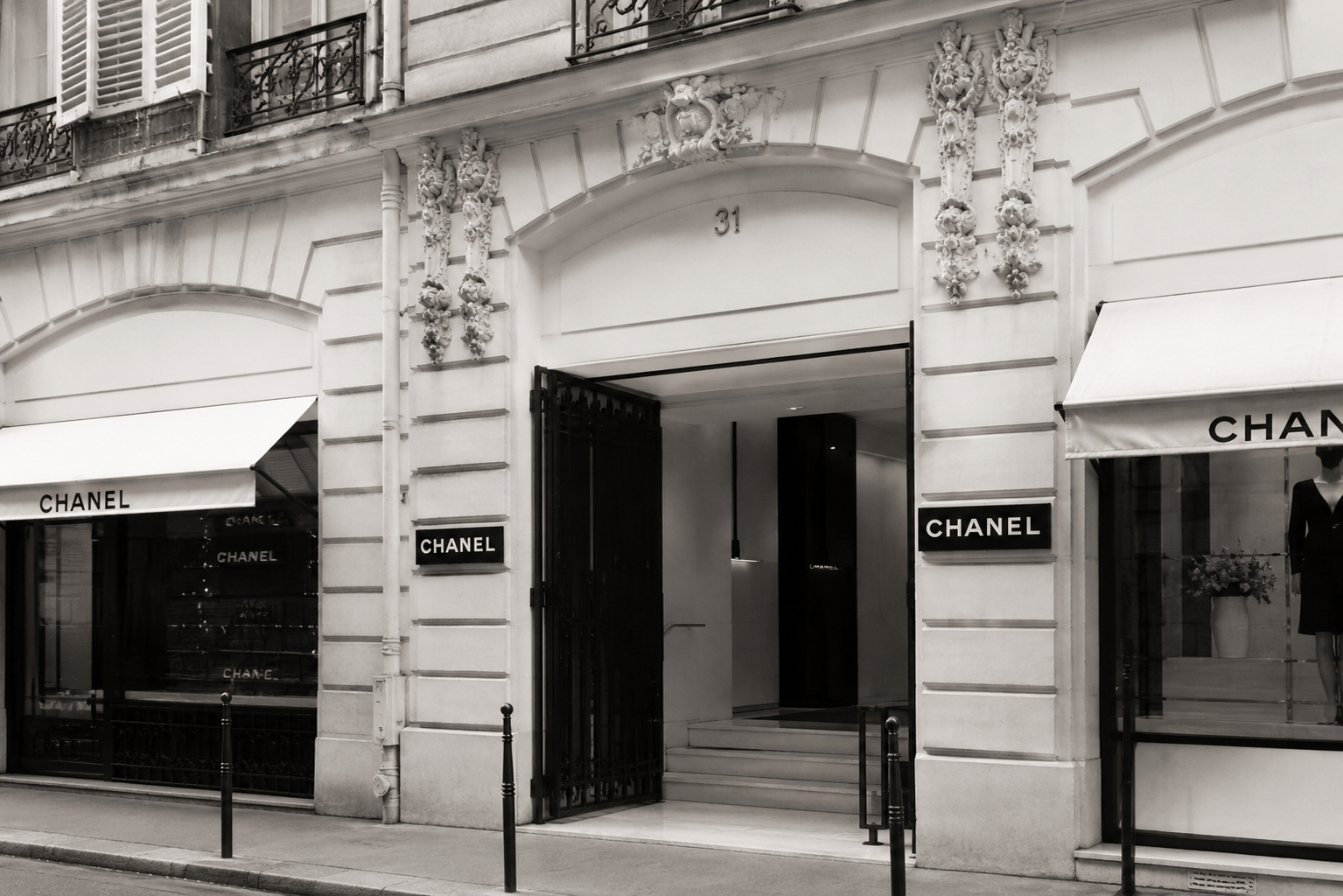
More than a century after Gabrielle “Coco” Chanel challenged traditional fashion, the house continues to reinterpret its tweed jackets, quilted handbags and couture collections while remaining unmistakably Chanel.
That enduring balance between innovation and heritage is explored further in The History of Chanel.
Rolex: Trust Earned Over Time
People rarely buy their first Rolex simply to know the time.
More often, it marks a milestone.
A promotion.
The sale of a business.
A retirement.
A lifelong ambition finally achieved.
Rolex has spent decades building trust through consistency, precision and craftsmanship.
The watch becomes a symbol of achievement because the brand has earned the credibility to represent one.
Patagonia: Authenticity Builds Loyalty
When Patagonia launched its famous “Don’t Buy This Jacket” campaign, it appeared to contradict everything traditional marketing encouraged.
Instead of promoting consumption, the company encouraged customers to repair existing garments whenever possible.
The campaign strengthened rather than weakened the business because it demonstrated authenticity.
Purpose became action.
Customers rewarded that honesty with even greater loyalty.
LEGO: Growing With Every Generation
Few brands create emotional connection as naturally as LEGO.
Parents who once built castles and spaceships as children now watch their own children use the very same bricks.
The product has evolved.
Its purpose has not.
Creativity.
Imagination.
Shared experiences.
That continuity has allowed LEGO to remain relevant despite dramatic technological change.
Common Branding Mistakes
While great brands are built patiently, weaker brands often undermine themselves through avoidable decisions.
One of the most common mistakes is competing primarily on price. Discounts may increase short-term sales, but they rarely create lasting brand loyalty.
Another is constantly changing visual identity or messaging. Customers trust familiarity. Frequent reinvention often creates confusion rather than recognition.
Many companies also focus heavily on acquiring new customers while neglecting existing ones. Yet long-term growth usually comes from strengthening relationships with loyal customers rather than constantly replacing them.
Perhaps the greatest mistake of all is trying to appeal to everyone.
Great brands understand exactly who they serve—and accept that they are not meant for everybody.
Clarity creates recognition.
Recognition builds trust.
Trust creates loyalty.
Frequently Asked Questions
What makes a brand successful?
A successful brand combines clear purpose, strong positioning, consistent customer experiences and long-term trust. Together, these elements create loyalty that extends beyond individual products.
What is the difference between a brand and a product?
A product is what a company sells. A brand is the meaning, reputation and emotional perception customers associate with that product.
Why can strong brands charge premium prices?
Strong brands reduce perceived risk, create emotional value and deliver consistent experiences. Customers are often willing to pay more because they trust what the brand represents.
Can a small business build a great brand?
Yes. Company size matters less than clarity. Small businesses with a distinctive purpose, authentic positioning and consistent customer experiences can build exceptionally strong brands over time.
How long does it take to build a great brand?
Great brands are rarely created overnight. They are built gradually through years of consistent decisions, reliable experiences and meaningful relationships with customers.
The Final Word
Most products eventually become obsolete.
Technology advances.
Design trends change.
Competitors catch up.
Yet the world’s greatest brands continue to thrive because they were never built around products alone.
They were built around purpose.
Around trust.
Around stories people choose to tell long after advertisements have disappeared.
Whether it is a Rolex celebrating a career milestone, a Chanel jacket passed from one generation to the next, or an Apple device that feels instantly familiar, iconic brands become part of people’s lives because they stand for something greater than the products they sell.
At SWORD Arabia, we believe that is the defining difference between a successful business and an exceptional brand.
One competes for attention.
The other earns a lasting place in culture.
And in a world where products can be copied almost overnight, that may be the most valuable competitive advantage of all.