

There are garments designed to be worn.
And then there are garments created to be remembered.
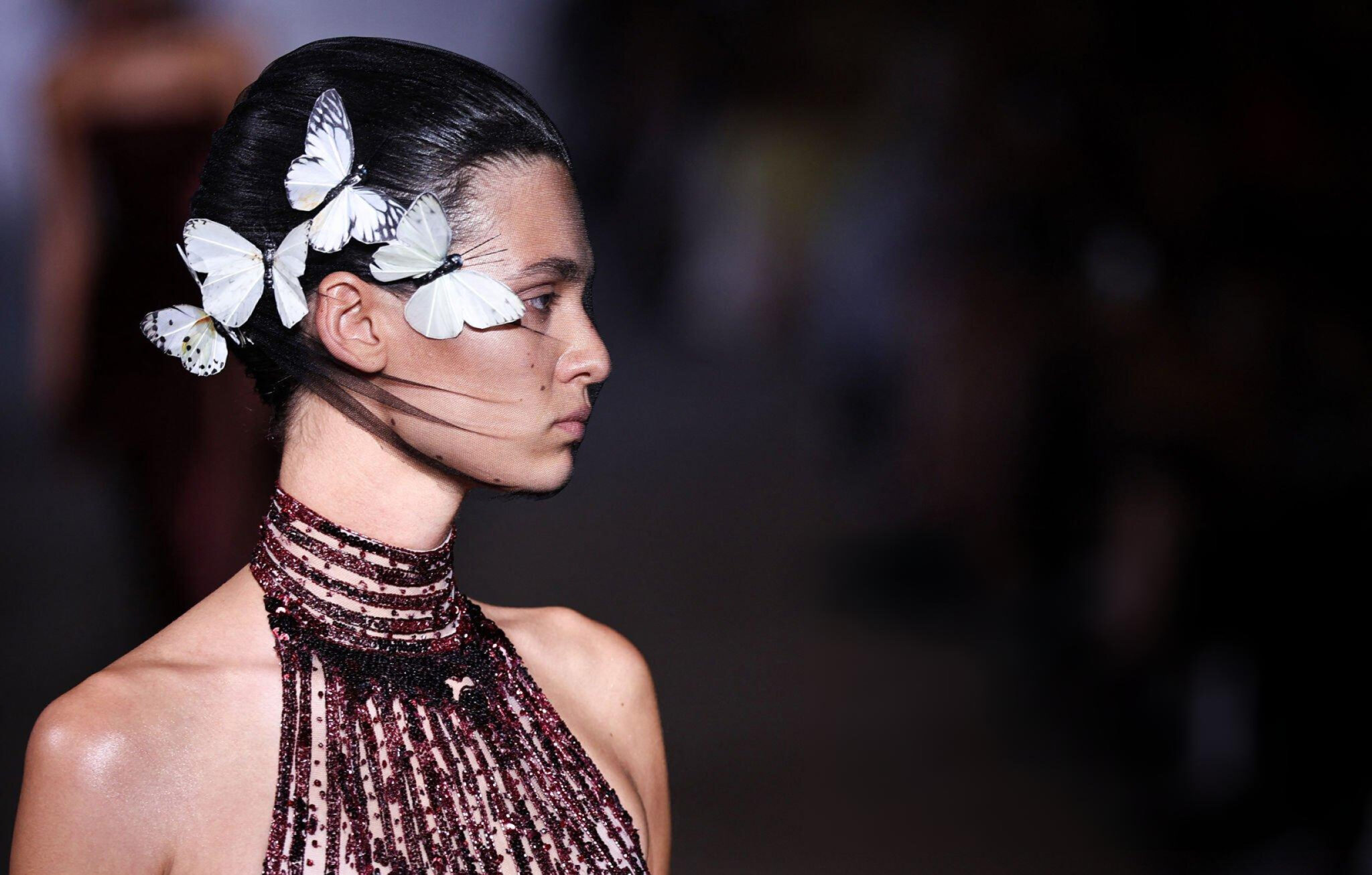
The difference is not always visible at first glance. It lies in the hundreds of hours spent hand-embroidering a single bodice, the countless fittings that refine every silhouette, and the generations of craftsmanship preserved within the walls of Parisian ateliers.
This is the world of haute couture.
Often described as the pinnacle of luxury fashion, haute couture is also one of its most misunderstood concepts. The term is frequently used to describe extravagant gowns or exceptionally expensive clothing, yet true haute couture is neither a marketing label nor a synonym for luxury.
It is a legally protected designation reserved for a select group of fashion houses that meet strict standards established in France.
That exclusivity is precisely what makes couture so extraordinary.
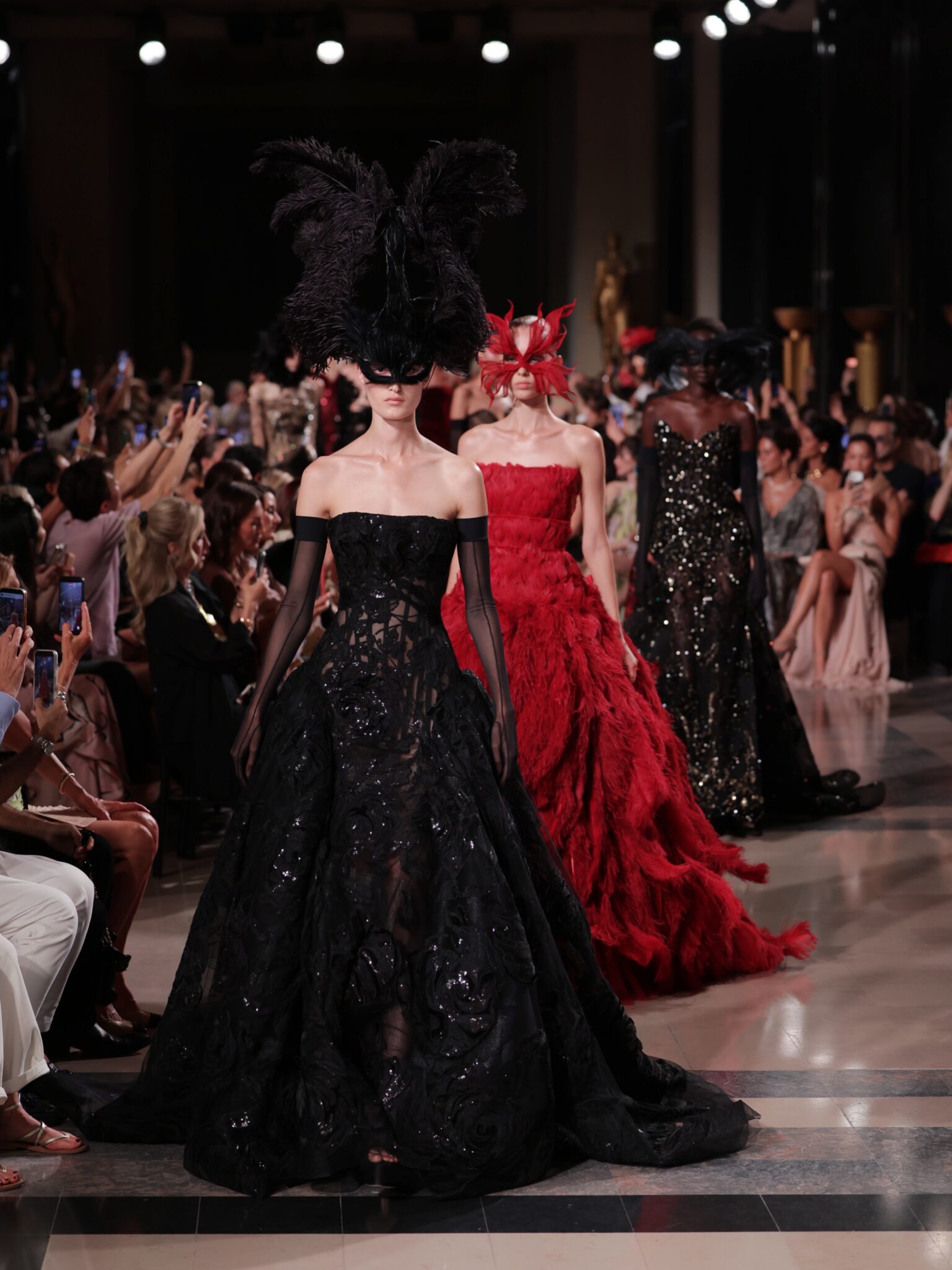
Each collection represents the highest level of craftsmanship the fashion industry can offer, where artistry takes precedence over commercial production and every garment is created for a single client rather than a mass audience.
Although only a handful of people will ever own a couture creation, its influence extends far beyond private salons and Paris runways. The techniques perfected inside couture ateliers shape ready-to-wear collections, inspire designers around the world and preserve traditional craftsmanship in an increasingly industrialised fashion industry.
At SWORD Arabia, we believe true luxury is defined not only by exclusivity, but by the skill, heritage and creativity that give exceptional craftsmanship its lasting value.
Understanding haute couture is, therefore, about more than understanding fashion.
It is about understanding why craftsmanship still matters.
What Does Haute Couture Mean?
The expression haute couture translates literally from French as “high sewing” or “high dressmaking.”
In practice, however, it represents something far more significant.
Haute couture refers to garments created entirely to the measurements of an individual client using exceptional materials and an extraordinary amount of hand craftsmanship. Every piece is made almost exclusively by hand, often requiring hundreds—or even thousands—of hours of work from specialised artisans.
Unlike ready-to-wear fashion, couture is never produced in standard sizes or large quantities.
Each design is unique.
Each fitting is personal.
Each garment exists because it was commissioned for one individual.
This philosophy transforms clothing into something closer to art than apparel.
The value of haute couture is not measured solely by the finished dress, but by the expertise, patience and savoir-faire invested in every stitch.
The History of Haute Couture
Modern haute couture traces its origins to nineteenth-century Paris, where fashion began to evolve from skilled tailoring into creative authorship.
At the centre of this transformation stood Charles Frederick Worth, an English designer who established his fashion house in Paris during the 1850s.
Worth introduced a revolutionary idea.
Instead of waiting for clients to dictate every design, he presented original collections that customers could select and adapt to their own preferences.
This shifted the role of the couturier from craftsman to creative designer, laying the foundation for the modern fashion house.
Paris quickly became the world’s capital of couture.
Its ateliers attracted royalty, aristocrats, artists and society figures seeking garments unlike anything available elsewhere.
Throughout the twentieth century, legendary designers such as Christian Dior, Gabrielle “Coco” Chanel, Cristóbal Balenciaga and Elsa Schiaparelli expanded couture’s influence, transforming it into a global symbol of elegance, innovation and artistic expression.
Today, Paris remains the undisputed home of haute couture, continuing a tradition that has shaped luxury fashion for more than 150 years.
Who Can Legally Use the Term “Haute Couture”?
One of the most surprising facts about haute couture is that not every luxury brand is permitted to use the term.
Unlike many fashion expressions, haute couture is legally protected under French law.
The title is regulated by the Fédération de la Haute Couture et de la Mode (FHCM), the organisation responsible for overseeing the official couture calendar and recognising eligible fashion houses.
To qualify, a maison must satisfy strict requirements that reflect the highest standards of craftsmanship.
Among them are:
- Designing made-to-measure garments for private clients.
- Operating an atelier in Paris with a team of highly skilled artisans.
- Presenting original couture collections during the official Paris Haute Couture Week calendar.
- Demonstrating exceptional craftsmanship consistent with the traditions of French couture.
Only those that meet these standards may officially describe their collections as haute couture.
Other luxury brands may produce exquisite handmade garments, but unless they are recognised by the FHCM, they cannot legally market them using that designation.
This distinction protects not only the reputation of couture, but also the centuries-old craftsmanship it represents.
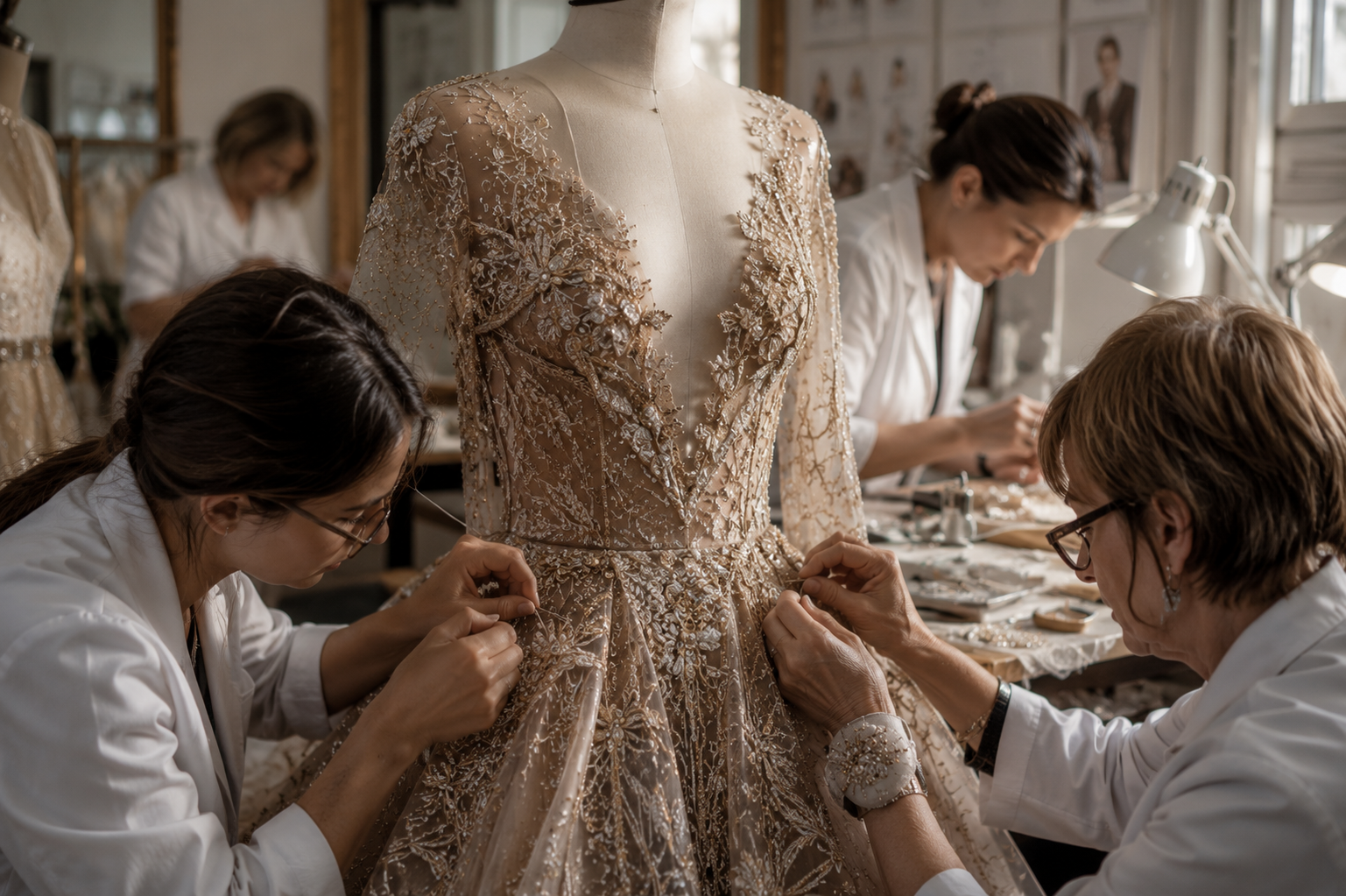
How Is a Haute Couture Garment Made?
Every couture creation begins long before fabric is cut.
It starts with an idea.
A sketch.
A conversation between designer and client.
From there, the process becomes a remarkable collaboration involving pattern makers, embroiderers, seamstresses, feather specialists, textile artisans and countless other experts, each responsible for a single aspect of the finished piece.
The fabric itself is carefully selected, often sourced from the world’s finest textile manufacturers.
Silk, lace, organza, chiffon and handwoven fabrics are chosen not simply for appearance, but for how they move, drape and respond to the body.
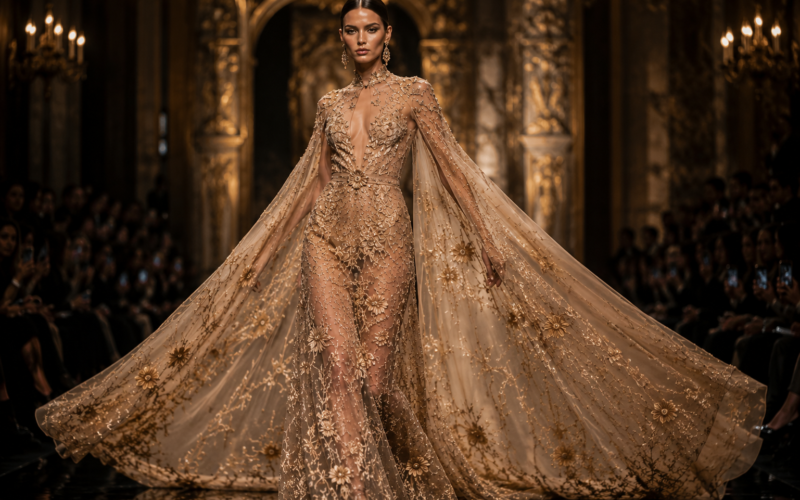
Many couture garments then pass through specialised embroidery ateliers, where thousands of beads, sequins, crystals or delicate threads are applied entirely by hand.
Some decorative details require weeks of uninterrupted work.
Others take months.
Multiple fittings follow, allowing every seam, proportion and silhouette to be refined until the garment appears almost effortless on the wearer.
Nothing is rushed.
Nothing is accidental.
This extraordinary attention to detail explains why a single haute couture dress may require several hundred hours of craftsmanship, and why some of the world’s most elaborate creations take well over a thousand hours to complete.
In couture, perfection is not an aspiration.
It is the standard.
Haute Couture vs Ready-to-Wear
To understand haute couture, it helps to understand what it is not.
While both couture and ready-to-wear originate from the world’s leading fashion houses, they are created for entirely different purposes.
Ready-to-wear—or prêt-à-porter—is designed to be produced in standard sizes and sold to a wider audience. Although luxury ready-to-wear collections often feature exceptional fabrics and craftsmanship, they remain commercially produced.
Haute couture follows a different philosophy.
Every garment is made for one client, tailored to their exact measurements and refined through multiple fittings. Rather than adapting the wearer to the garment, couture adapts the garment to the wearer.
The differences extend beyond sizing.
A ready-to-wear collection may produce hundreds—or even thousands—of identical pieces. A couture gown may exist only once.
Production timelines also differ dramatically. While ready-to-wear collections move according to retail calendars, a single haute couture creation may require hundreds of hours of embroidery, draping, stitching and finishing before it is complete.
That exclusivity is reflected in the price.
A couture garment can cost tens or even hundreds of thousands of dollars—not because of a logo, but because of the extraordinary craftsmanship invested in every detail.
The World’s Leading Haute Couture Houses
Every couture house has its own creative language.
Some are celebrated for timeless elegance, others for theatrical artistry or technical innovation. Together, they represent the highest level of contemporary fashion craftsmanship.
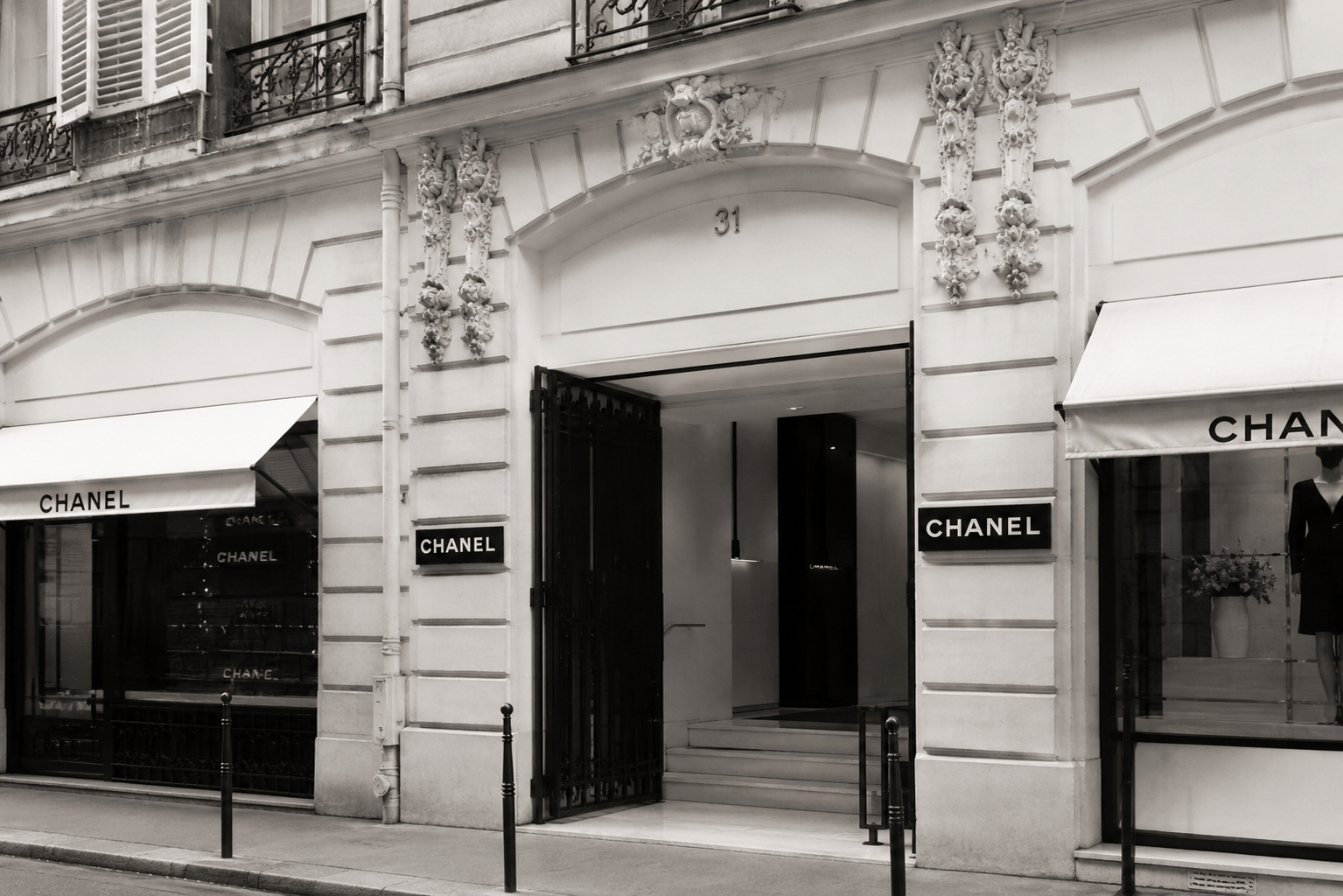
Chanel
Few maisons embody Parisian elegance like Chanel.
Its haute couture collections continue the legacy established by Gabrielle “Coco” Chanel, combining refined tailoring with remarkable attention to detail. The house’s ateliers preserve techniques that have shaped French fashion for more than a century, proving that true luxury often lies in restraint rather than excess.
Dior
When Christian Dior introduced the New Look in 1947, he transformed post-war fashion and redefined modern femininity.
Today, Dior Haute Couture continues to balance tradition with artistic experimentation, producing collections that are as emotionally expressive as they are technically accomplished.
For a closer look at Dior’s latest couture vision, read Dior Couture Blooms Into a Dream Garden in Paris.
Schiaparelli
Schiaparelli occupies a unique place within couture.
Founded by Elsa Schiaparelli, the maison has always embraced surrealism, bold symbolism and sculptural silhouettes that challenge conventional ideas of beauty.
Its modern collections continue that legacy, proving that couture can be provocative as well as beautiful.
Maison Margiela
Under its Artisanal collections, Maison Margiela approaches couture through innovation rather than tradition alone.
Unexpected materials, deconstruction and experimental techniques transform familiar garments into wearable works of art, pushing the boundaries of what couture can become.
Giambattista Valli
Giambattista Valli is celebrated for dramatic volumes, romantic silhouettes and vibrant colour.
His couture creations often evoke the grandeur of classic Parisian fashion while maintaining a contemporary sense of lightness and movement.
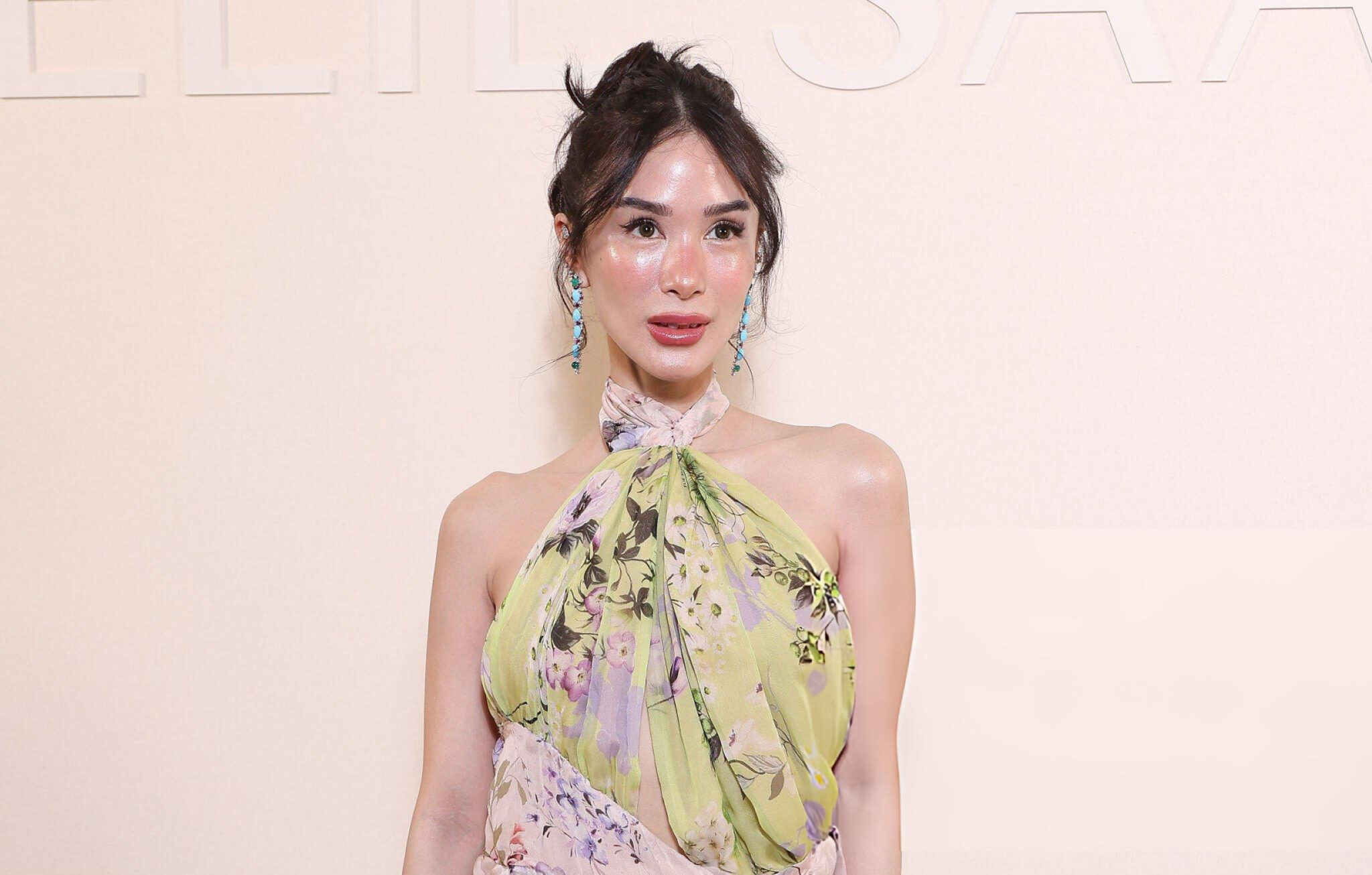
Elie Saab
Among the world’s leading couturiers, Elie Saab has become synonymous with red-carpet glamour.
His signature use of embroidery, delicate embellishment and flowing silhouettes has made his creations favourites among royalty, celebrities and international clients alike.
Discover more in Elie Saab Turns Couture Into Evening Drama in Paris.
Valentino
Valentino’s couture collections have long balanced architectural precision with romantic elegance.
Whether through bold colour or exquisite simplicity, the maison demonstrates that emotional storytelling can be just as powerful as technical craftsmanship.
Fendi Couture
Although widely recognised for leather goods and accessories, Fendi has established a respected couture presence through exceptional textile expertise and innovative craftsmanship.
Its couture collections highlight the remarkable skill of Italian artisans while embracing contemporary luxury.
Contemporary couture also continues to evolve through designers such as Iris van Herpen, whose visionary creations merge fashion, science and architecture. Explore her latest collection in Iris van Herpen Turns Couture Into Living Architecture.
Likewise, Lebanese designer Zuhair Murad remains one of the defining names in couture, celebrated for richly embellished eveningwear and dramatic silhouettes. Read more in Zuhair Murad’s Night Vision Takes Over Paris Couture.
Why Haute Couture Still Matters Today
In an age defined by speed, haute couture offers something increasingly rare.
Time.
Every couture garment represents a deliberate rejection of mass production, reminding us that exceptional craftsmanship cannot be rushed.
Yet couture’s importance extends beyond the small number of people who commission these extraordinary pieces.
It safeguards centuries-old techniques that might otherwise disappear.
Hand embroidery.
Traditional tailoring.
Textile artistry.
Pattern making.
Without couture, many of these specialised skills would struggle to survive in an industry driven by efficiency and scale.
At SWORD Arabia, we see haute couture not simply as luxury fashion, but as a living archive of craftsmanship—one that continues to preserve cultural heritage while inspiring the future of design.
How Couture Continues to Shape Everyday Fashion
Very few people will ever wear haute couture.
Yet millions experience its influence.
The silhouettes introduced during Paris Haute Couture Week often inspire future ready-to-wear collections, luxury accessories and even high-street fashion seasons later.
Ideas born inside couture ateliers eventually appear in tailoring, eveningwear, fabrics and colour palettes seen around the world.
That influence extends far beyond the runway.
Many of the polished silhouettes and refined proportions defining contemporary summer dressing can ultimately be traced back to couture’s enduring emphasis on craftsmanship and design. You can see this evolution in Capri Pants, Kitten Heels and the New Mood of Polished Summer Style.
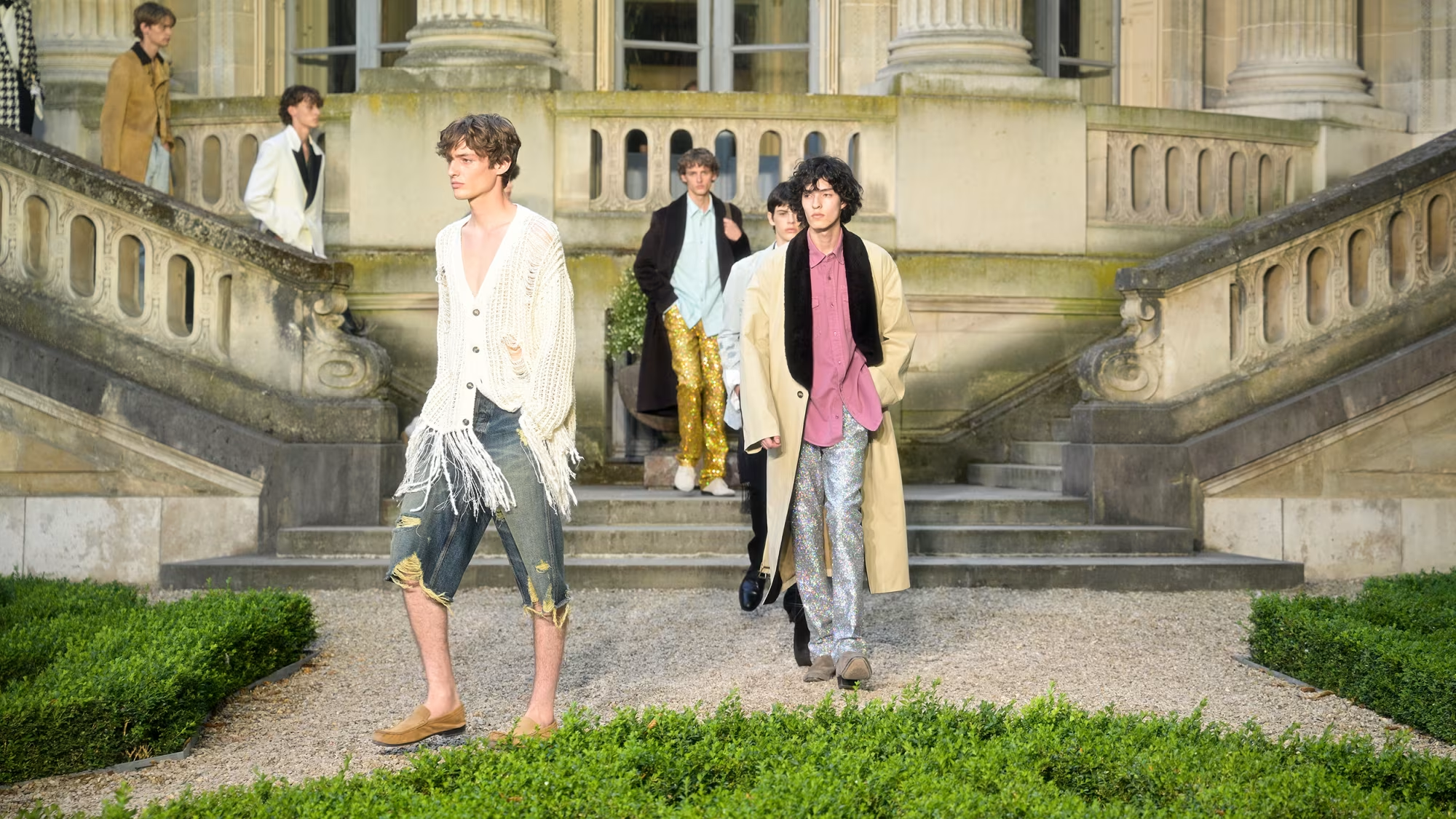
Similarly, Fashion Week continues to translate couture’s creative vision into broader fashion conversations, as explored in What Paris Fashion Week Men’s SS27 Reveals About the Future of Menswear.
In the Middle East, couture has become deeply connected to a growing appreciation for craftsmanship and bespoke luxury. This cultural shift is reflected in UAE Summer Is Becoming the New Language of Local Luxury, where regional identity increasingly intersects with global luxury.
Frequently Asked Questions
What is haute couture?
Haute couture refers to custom-made garments created exclusively for individual clients by fashion houses officially recognised under French regulations.
Who decides which brands can produce haute couture?
The Fédération de la Haute Couture et de la Mode (FHCM) oversees the official designation and determines which fashion houses meet the required standards.
Why is haute couture so expensive?
Because every garment is made by hand using exceptional materials and can require hundreds or even thousands of hours of specialised craftsmanship.
Can anyone buy haute couture?
Yes—provided they are willing to commission a garment and participate in the bespoke fitting process. Couture is exclusive, but it is not invitation-only.
Why is Paris considered the home of haute couture?
Paris established the modern couture system during the nineteenth century and remains home to the official couture calendar, recognised fashion houses and many of the world’s most prestigious ateliers.
The Final Word
Haute couture has never been about making the most expensive dress.
It has always been about preserving the highest standards of craftsmanship.
Every embroidered flower, every hand-finished seam and every perfectly balanced silhouette reflects countless hours of expertise that cannot be replicated by machines or mass production.
That is why couture continues to matter.
Not because it dresses millions of people.
But because it reminds the fashion industry what is possible when creativity is given time, patience and extraordinary skill.
At SWORD Arabia, we believe these values define true luxury. Whether expressed through a couture gown, a fine mechanical watch or an object of exceptional design, craftsmanship remains the thread that connects heritage with the future.
And perhaps that is haute couture’s greatest achievement.
Not that it creates beautiful clothing.
But that it continues to prove fashion can be both an art form and a cultural legacy worthy of preservation.